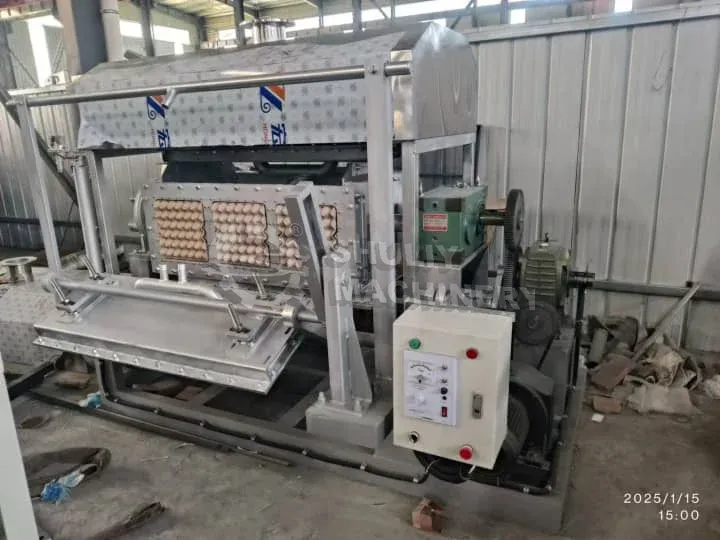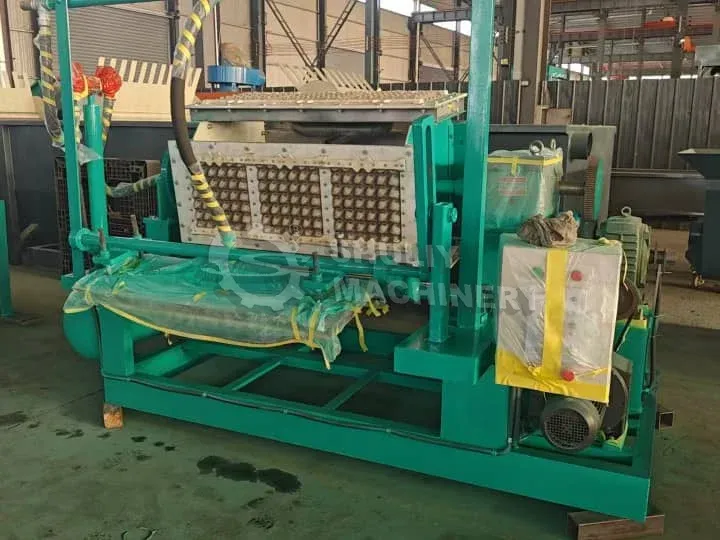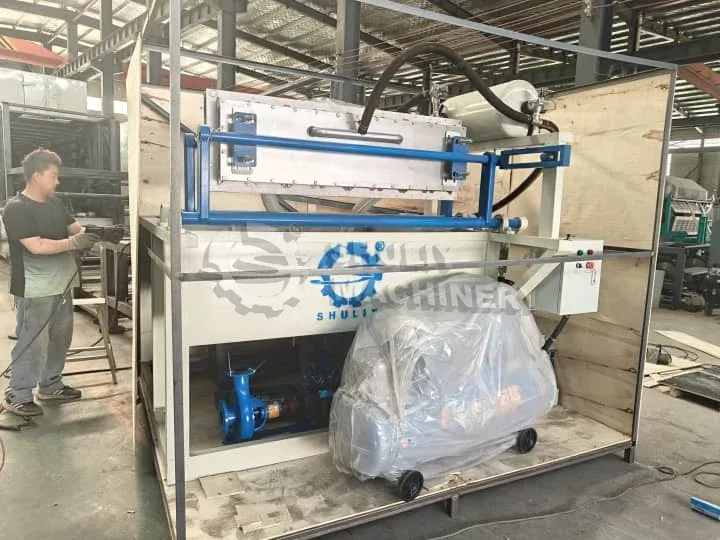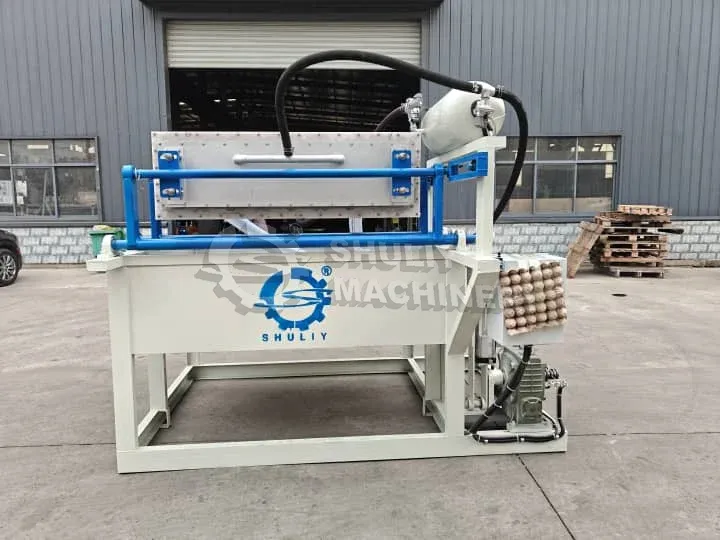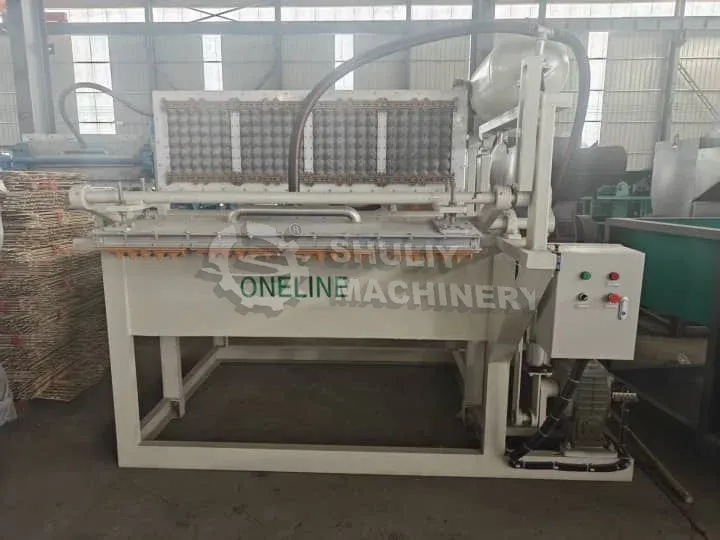
Malawi Feedback: SL-4×1 Egg Tray Machine with Natural Drying
This case study documents a complete 4×1 egg tray machine with natural sun drying installed at a poultry farm near Lilongwe, Malawi.
Our client runs a 35,000-layer farm with a 12,000-chick-per-month hatchery. He purchased a 1,500 pcs/h Maschine zur Herstellung von Eierschalen in early 2026, paired it with a 600 m² open-air drying yard, and has been running the operation for four months.
Below is the real story: the customer’s background, the equipment decision, the drying yard setup, four months of production data, and the customer’s own words from his feedback video.
Customer Background
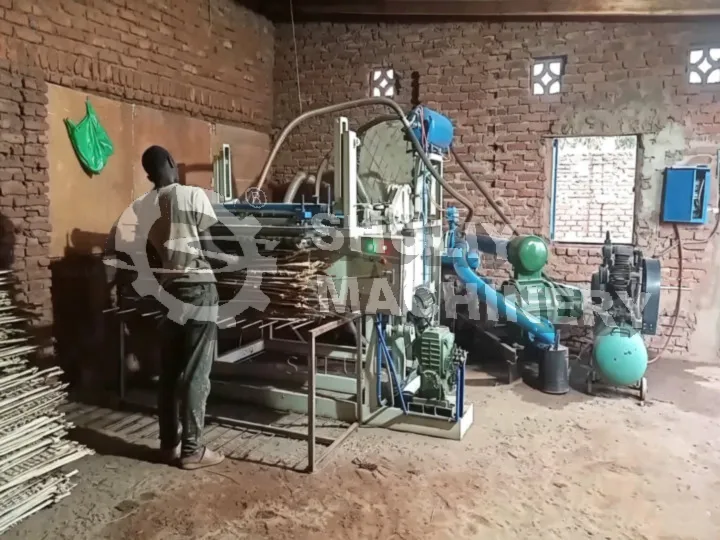
Our client runs a 35,000-layer poultry farm with a 12,000-chick-per-month hatchery, 18 km southwest of Lilongwe in central Malawi.
His own demand for paper trays runs at 1,800–2,200 pieces per day during peak season (August–December). He was buying from two local suppliers at $0.025 per tray and running into stockouts three or four times a year.
In November 2025, the math was simple: producing in-house at $0.007–$0.008 per tray would save his farm $700–$900 per month on packaging, with surplus to sell to four neighboring farms at $0.020–$0.025 wholesale.
His three priorities for the new line were 1,500+ pcs/h capacity, the lowest possible operating cost, and a low upfront investment he could self-fund from cash flow, not a bank loan.
Why Choose a 4×1 Egg Tray Machine with Natural Drying?
This client considered three options before ordering:
- A 3×1 manual line at 1,000 pcs/h. Cheapest option, but during peak demand he would need to run 16-hour days or buy additional trays.
- A 4×4 semi-automatic line with brick kiln at 2,500-3,000 pcs/h. Too much capacity for his market, and a brick kiln costs $8,000–$18,000 on top of the machine.
- A 4×1 line at 1,500–2,000 pcs/h with natural drying. Right capacity, lowest operating cost, no fuel or electricity for drying.
He chose option 3. Lilongwe’s climate was the deciding factor. From May to October, the dry season brings reliable sunshine at 25–32°C with very little rain, which is ideal for sun drying. The rainy season (November–April) brings 6–8 weeks of weather risk, but he was comfortable accepting that risk to keep his operating cost near zero.
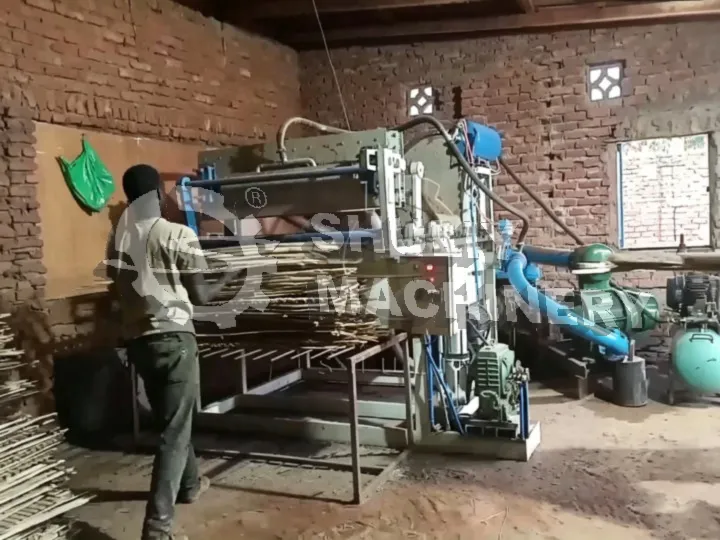
He also liked that the 4×1 was a small step up in price from the 3×1 (about $2,000 more) for a 50% increase in hourly output.
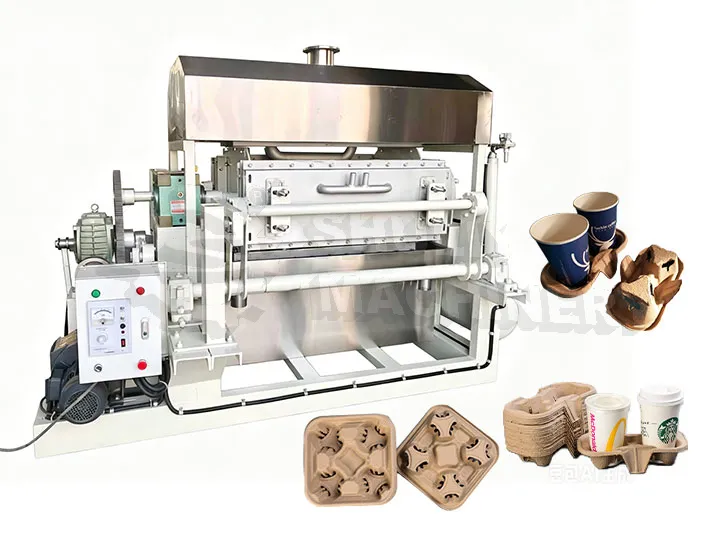
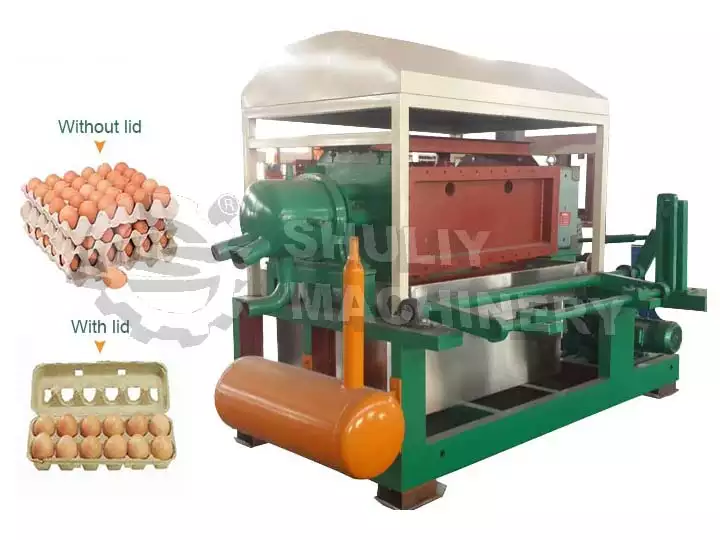
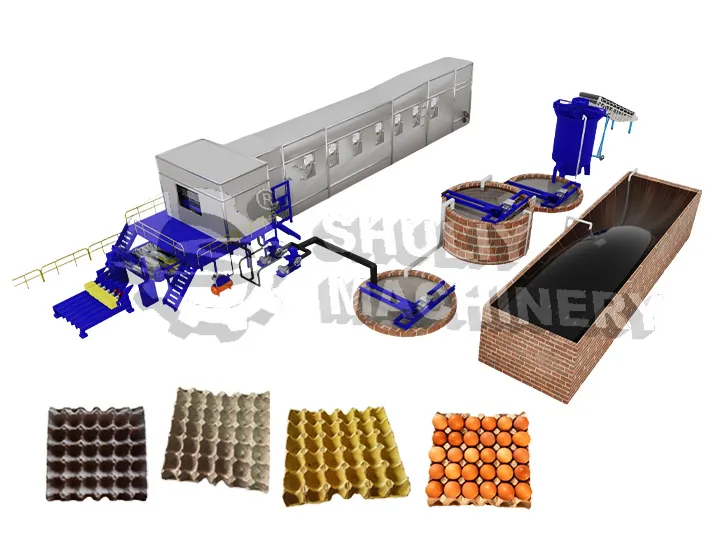
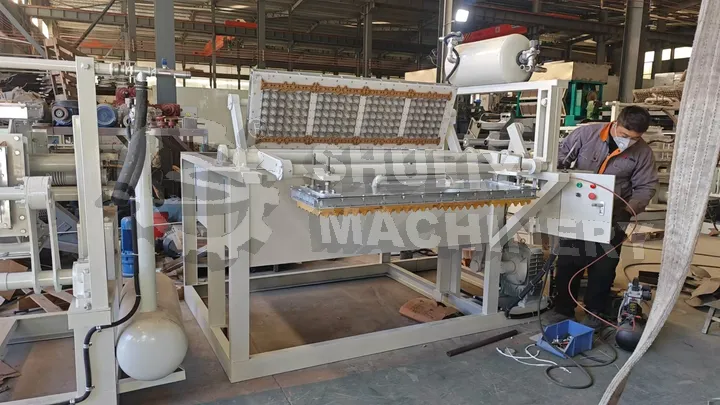
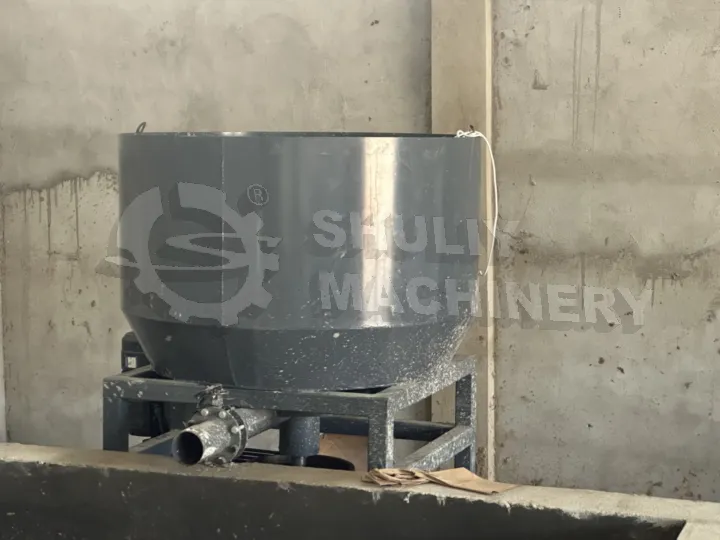
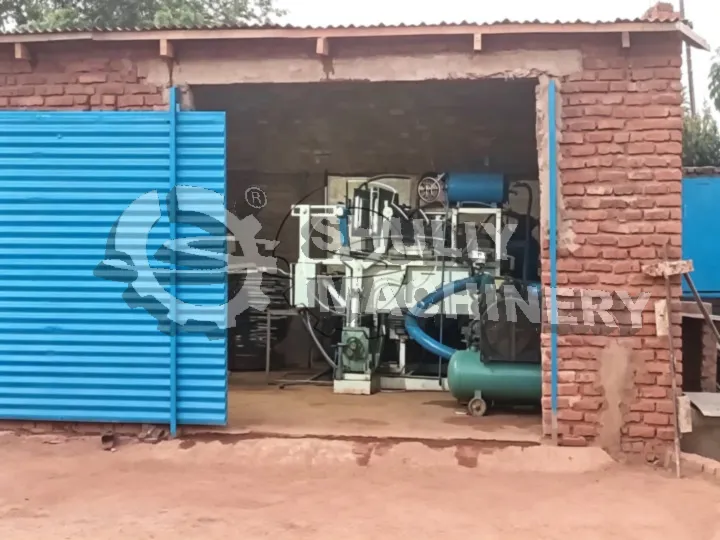
Der 4×1 egg tray machine and a 0.6 m³ hydraulic pulper shipped together in a 20 GP container. Total site footprint: 100 m² of covered shed for the machine, plus 600 m² of open drying yard. Total FOB price: $10,000–$14,000 USD, including the machine, two mold sets, and spare vacuum pump seals.
| Artikel | Spezifikation |
|---|---|
| Forming machine | 4×1 manual, 1,500–2,000 pcs/h |
| Formen | 30-cavity egg tray + 12-cavity apple tray (interchangeable) |
| Pulper | 0.6 m³ hydraulic, 7.5 kW |
| Vacuum pump | 7.5 kW water-ring type |
| Trocknungssystem | Natural sun drying on 200 bamboo + galvanized racks |
| Total power | ~30 kW (three-phase 380 V, 50 Hz) |
| Operator team | 6 workers (2 pulping, 1 forming, 2 drying, 1 packing) |
| Indicative line price (FOB) | $10,000–$14,000 USD |
Setting Up the 600 m² Drying Yard
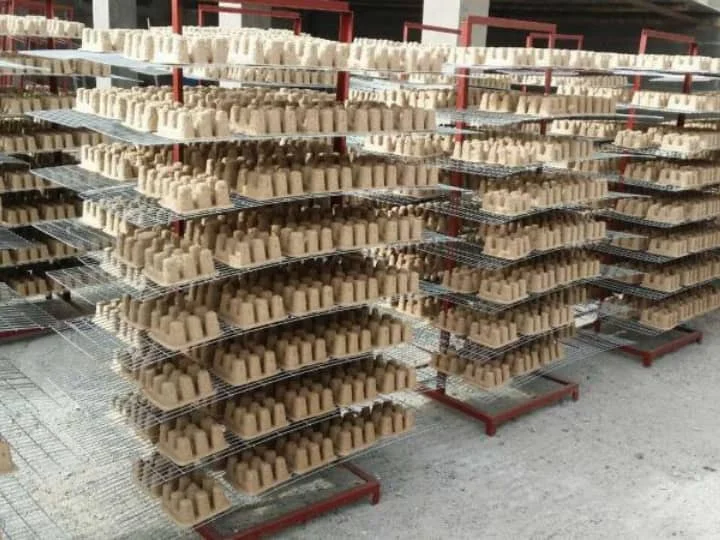
The drying yard took three weeks to build and cost roughly $1,500 in materials, mostly bamboo poles, galvanized wire mesh sheets, and a simple roof over the forming machine.
Our customer laid out the yard in 12 parallel rows, with 16–18 racks per row, for a total of 200 racks. Each rack holds 24 mesh sheets, and each sheet holds 4 freshly formed trays, so a full yard holds 19,200 trays per drying cycle.
The 4×1 egg tray machine produces about 1,700–1,850 trays per hour, so a full drying cycle (the yard filled in roughly 11–12 hours of forming) matches the production rate of one working day. The trickiest part was choosing the site.
He picked a flat, open area with morning sun on the east side and no trees blocking the wind, which keeps the trays drying evenly through the day.

Drying time depends on temperature and humidity. His actual log from the first four months shows:
| Temperature / Season | Drying Time | Comment |
|---|---|---|
| 30–35°C (Sep–Oct) | 2–3 hours | Fastest, no flipping needed |
| 25–30°C (May–Aug) | 4–5 hours | Standard cool-dry season |
| 15–20°C (Jun–Jul) | 12–18 hours | Cold mornings, one manual flip at 50% drying |
| Rainy (Nov–Apr) | Stalls or 24+ hours | Plan for 6–8 weeks of weather risk per year |
Workers flip each tray once at the 50% drying point during the cool months, which prevents warping. Mr. Banda learned this the hard way in his first batch, when 8% of trays came out with curled edges.
Production Results After Four Months
He has been running the line for four months. Here are the real numbers from his monthly production reports (January–April 2026), which he shared with us for this case study:
- Daily output: 1,700–1,850 trays on a single 8-hour shift, depending on temperature
- Reject rate: 2.1% (mostly edge warping in cold June mornings, now controlled by mid-day flipping)
- Waste paper cost: $65 per ton (sourced from Lilongwe printing houses and offices)
- Energy cost: $0 for drying (sun only); about $8/day for pulper + vacuum pump electricity
- Labor cost: $25 per day (6 workers × ~$4/day)
- Total production cost: $0.007 per tray (0.5 kg waste paper + energy + labor)
- Selling price: $0.020 (wholesale to other farms) / $0.025 (small retail)
- Monthly gross profit (single shift, 22 working days): $3,200
- Payback period: 3.8 months (line cost $12,200 landed; 4 months of profit covered the full investment)
He is now running 5 days a week on a single shift and has 1,500–2,000 surplus trays per week that he sells to two nearby poultry farms at wholesale price. The line is paying for itself faster than he expected.
Customer’s Own Words
“The machine is simple and the sun does the rest. My biggest mistake was not building a simple rain cover for the transition months—now I have a plastic sheet on a rope that I pull over the racks when clouds come. That alone cut my rainy-season rejects in half.
If I were starting again, I would buy the 4×1 egg tray machine with one extra mold and a small generator, nothing more.”— Poultry Farm, Lilongwe Region, Malawi
Plan Your Own 4×1 Egg Tray Production
If a 4×1 egg tray machine line with natural drying fits your climate and budget, send us your city, target capacity, and the months of reliable sunshine at your site. We will reply with a custom configuration, a drying yard layout, and an itemized quotation.