Séchoir à plateaux à œufs
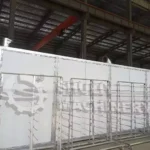
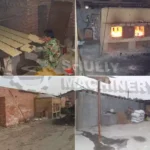
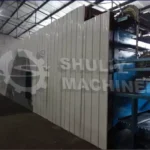
Paper Tray Dryer | Indsutrial Dryer
Drying methods: Natural drying, trolley dryer, brick kiln drying, and multi-layer metal dryer
Suitable capacity: 1000-6000 pcs/h
Feature: Multiple options, suitable for various egg tray production scales, customized configuration
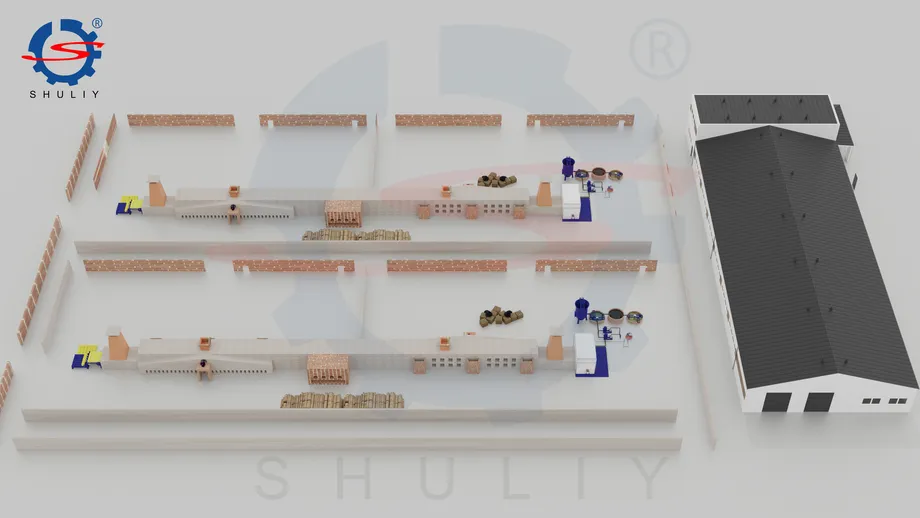
Service: On-site guidance & installation, customized solution design, 3D plant layout
Price(from high to low): Metal dryer→Brick kiln drying→Trolley dryer→Natural drying
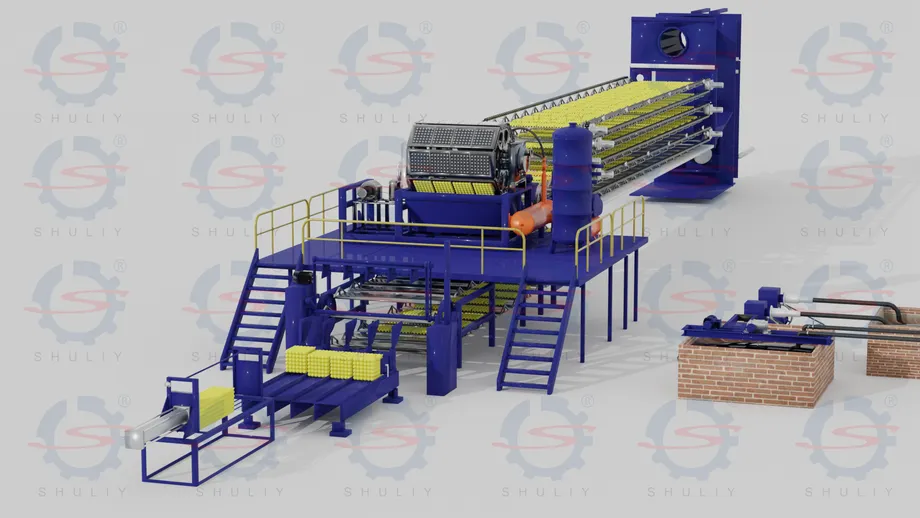
Le Séchoir à plateaux à œufs is mainly used to dry the wet egg tray in the paper tray production. Shuliy Machinery offers four drying solutions—natural drying, trolley dryer, brick kiln dryer, and metal dryer—for production capacities from 1,000 to 6,000 pieces per hour.
Our drying systems are designed for the egg tray production line, transforming wet paper trays into finished products ready for packaging. With CE certification and machines shipped to 80+ countries, we have the right drying solution for your production scale.
Introduction to Egg Tray Dryers
The egg tray drying machine is an essential part of the egg tray manufacturing process. After the pulping and forming stages, wet trays need proper drying before they can be packaged and sold.
The right drying method depends on your production volume, budget, and local climate conditions. Shuliy offers four main drying options to match different business needs—from budget-friendly natural drying to high-speed industrial metal dryers.
Four Drying Methods Explained
1. Natural Drying
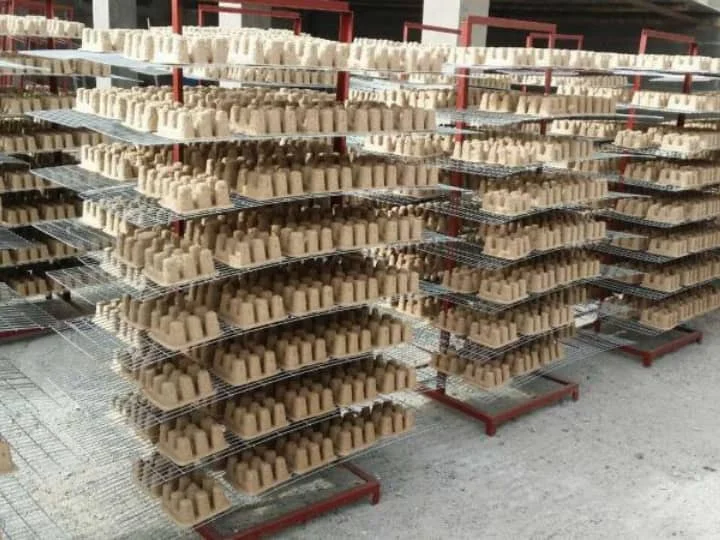
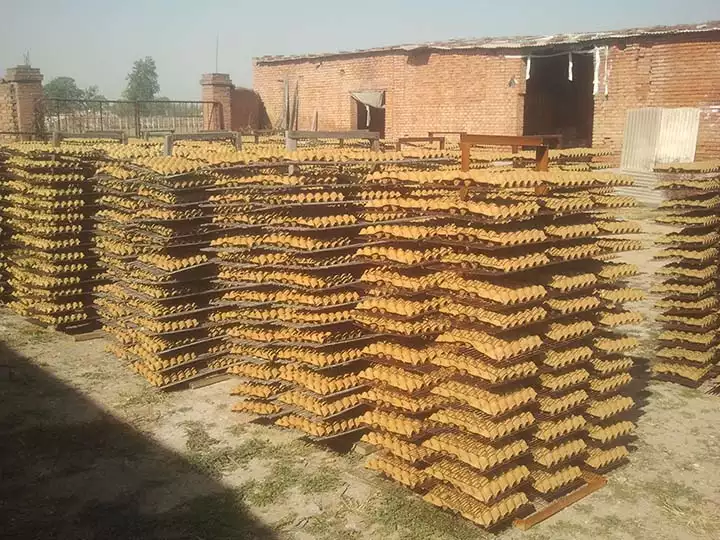
Natural drying uses sunlight and ambient airflow to dry wet egg trays. This paper egg tray dryer method is completely manual and requires drying racks and trays.
How it works: Place formed trays on bamboo or galvanized trays, then arrange them on drying racks in an open area. Sunlight and natural wind complete the drying process.
Setup requirements:
- 100-200 drying racks
- Each rack holds 24-30 mesh sheets
- Each sheet holds 3-4 egg trays
Drying time depends on temperature:
| Temperature | Drying Time |
| 30-35°C | 2 hours |
| 25°C | 5 hours |
| 5-10°C | 48 hours |
Best for: Small-scale production (1,000-2,000 pcs/h), warm climates (30-40°C)
Avantages:
- No energy costs
- Lowest operating expenses
- Opération simple
Disadvantages:
- Weather-dependent
- Requires more labor
- Large floor space needed
2. Trollet Dryer / Cart Dryer
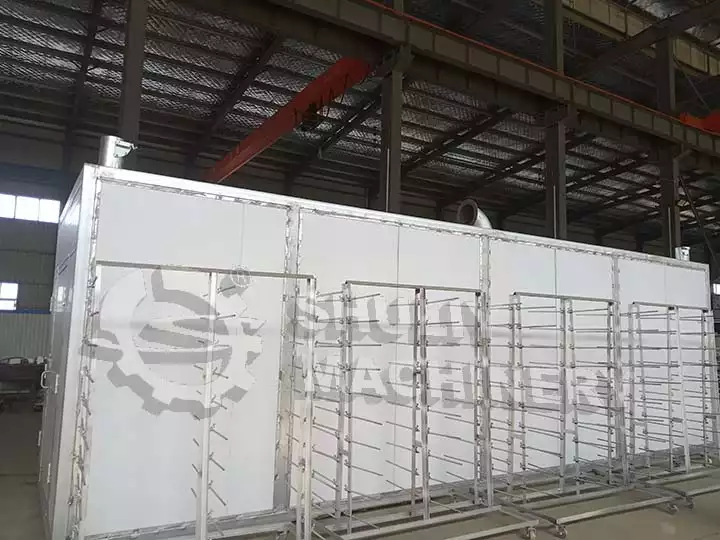
This semi-automatic system uses heated carts inside an enclosed drying chamber. This egg tray dryer provides consistent results regardless of weather conditions.
How it works: Place trays on galvanized carts, then push carts into the drying chamber. After 30-40 minutes at 180-200°C, trays emerge fully dry.
Equipment specifications:
- Drying room holds 10-12 carts
- Each cart holds 90-100 trays
- Recommend keeping 10 extra carts for continuous operation
Best for: Small to medium production (2,000-3,000 pcs/h)
Avantages:
- All-weather production
- Smaller footprint than natural drying
- Consistent quality
Disadvantages:
- Higher labor requirements
- Operating costs higher than natural drying
3. Brick Kiln Dryer
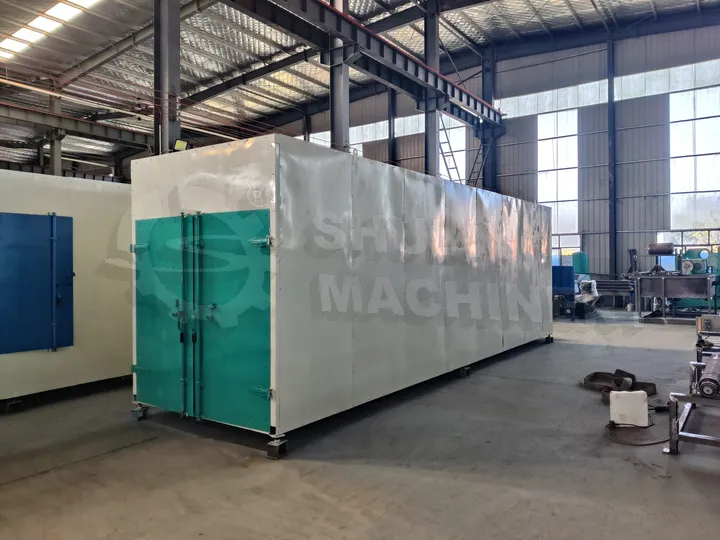
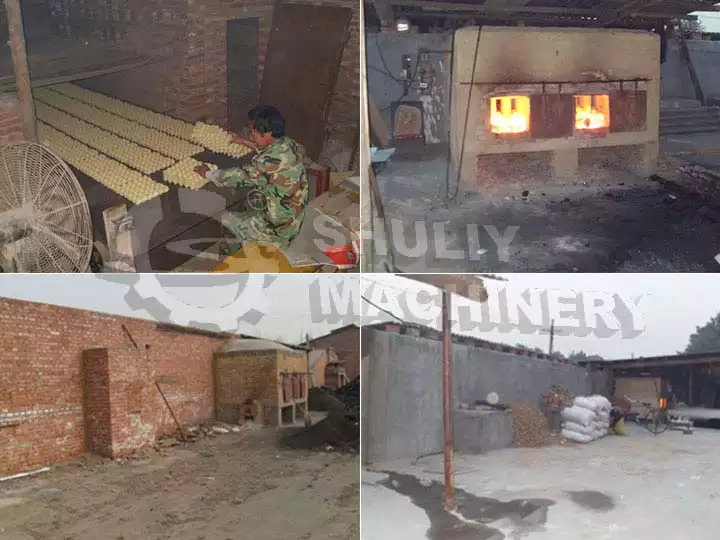
The brick kiln system uses a long drying tunnel with conveyor belts. It’s semi-automatic and ideal for medium-scale operations.
How it works: Wet trays enter the drying tunnel via conveyor belt. After 15 minutes at 180-200°C, they exit the other side fully dried.
Caractéristiques:
- Tunnel length: 40-70 meters
- Temperature: 180-200°C
- Drying time: 15 minutes
Best for: Medium to large production (2,500+ pcs/h)
Avantages:
- Lower construction cost than the multi-layer metal dryer
- Semi-automatic operation
- Consistent quality
Disadvantages:
- Require a long building space
- Higher operating costs than the egg tray metal dryer
4. Multi-Layer Metal Dryer
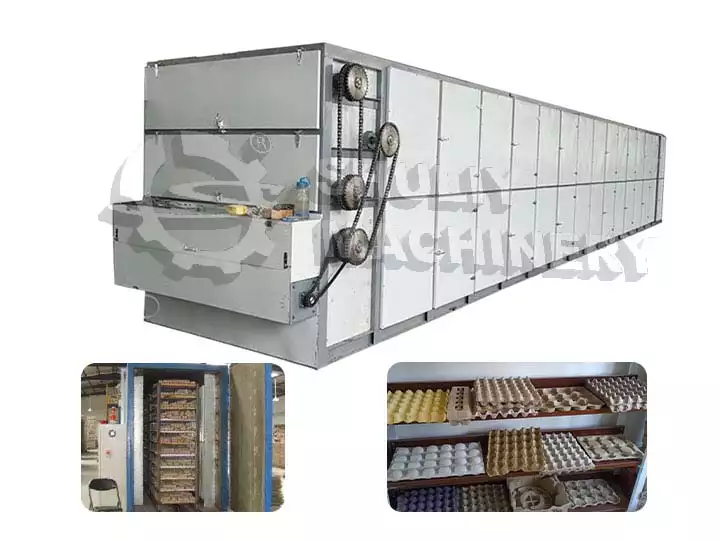
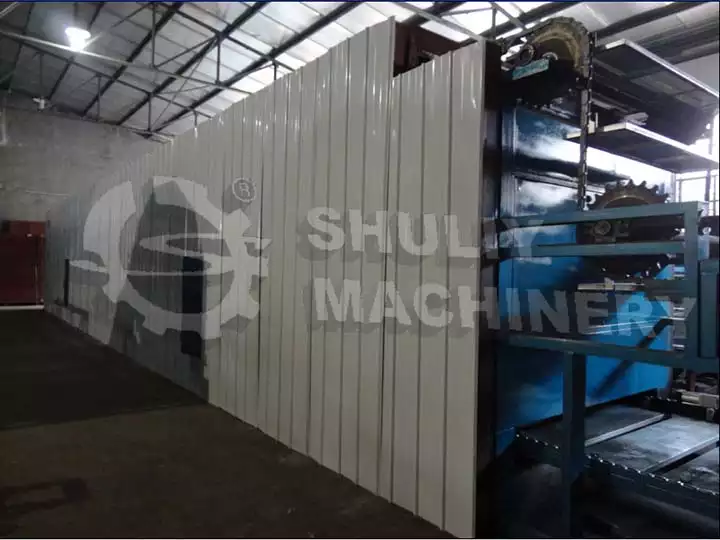
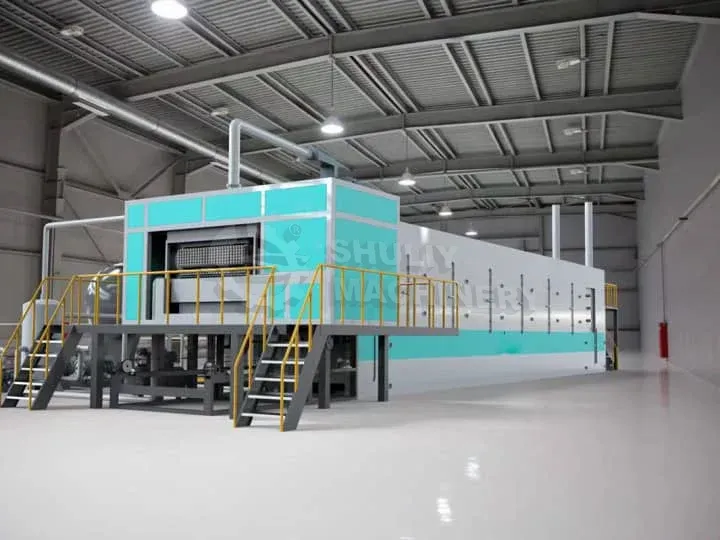
The metal dryer is our most advanced drying solution. It’s fully automatic and designed for high-volume industrial production.
How it works: Trays enter the drying chamber on trays, pass through 6 layers over 25 minutes at 180-200°C, then exit from the bottom.
Caractéristiques:
- Chamber dimensions: 18m × 6 layers
- Temperature: 180-200°C
- Drying time: 25 minutes
- Output: 5,000-6,000 pcs/h
Fuel options:
- Coal
- Wood
- Natural gas
- Diesel
Best for: Large-scale industrial production (5,000-6,000 pcs/h)
Avantages:
- Compact footprint
- Energy-efficient design
- Fully automatic operation
- High output capacity
Disadvantages:
- Higher initial investment
Paper Egg Tray Drying Method Comparison
Below is a comparison of four egg tray dryer methods for your reference.
| Method | Capacité | Drying Time | Temperature | Automatisation | Best For |
| Natural | 1,000-2,000 pcs/h | 2-48 hours | Ambient | Manual | Small scale, warm climates |
| Trolley Dryer | 2,000-3,000 pcs/h | 30-40 min | 180-200°C | Semi-auto | All-weather small production |
| Brick Kiln | 2,500+ pcs/h | 15 min | 180-200°C | Semi-auto | Medium production |
| Metal Dryer | 5,000-6,000 pcs/h | 25 min | 180-200°C | Fully auto | Industrial scale |
How to Choose the Right Egg Tray Dryer?
Not sure which drying method fits your needs? Here are the key factors to consider:
- Production Volume
- Match the dryer capacity to your egg tray machine output. Natural drying works for 1,000-2,000 pcs/h machines. The multi-layer metal dryer handles 5,000-6,000+ pcs/h.
- Climate Conditions
- Natural drying performs best in warm, dry regions (30-40°C). If your area has limited sunshine or high humidity, consider a closed drying system.
- Budget Constraints
- Natural drying has the lowest operating costs but requires more labor and space. Metal dryers need a higher upfront investment but offer the best long-term efficiency.
- Labor Availability
- Natural drying requires more workers for handling racks. Automated systems need fewer operators but require skilled technicians.
- Production Continuity
- If you need year-round production regardless of weather, choose a closed drying system (cart dryer, brick kiln, or metal dryer).
Fuel Options for Industrial Dryer
The egg tray dryer (brick kiln and metal dryer) can use various fuel sources:
| Fuel Type | Avantages | Inconvénients |
| Coal | Cheap, widely available | Environmental concerns |
| Wood | Renewable, clean | Require storage space |
| Natural Gas | Clean burning, convenient | Higher cost |
| Diesel | Portable, reliable | Expensive fuel |
Your choice depends on local fuel availability and environmental regulations.
FAQs of Paper Tray Dryer Machine
Which drying method is most cost-effective?
Natural drying has the lowest operating costs since it uses no fuel. However, it requires more labor and large drying areas. For high-volume production, the metal dryer offers the best efficiency despite higher initial costs.
How long does natural drying take?
Drying time depends on temperature:
30-35°C: approximately 2 hours
25°C: approximately 5 hours
5-10°C: up to 48 hours
What’s the difference between brick kiln and metal dryer?
The brick kiln dryer has a longer tunnel (40-70m) and works on a conveyor system.
The metal dryer is more compact (18m × 6 layers) with a multi-layer tray system.
Metal dryers are fully automatic, while brick kilns are semi-automatic.
Can I upgrade my drying system later?
Yes. Many customers start with natural drying and upgrade to industrial dryers as their business grows. We can help you plan for future expansion.
What fuel should I choose?
Consider local availability and cost.
Natural gas is the cleanest, but it may not be available everywhere.
Coal and wood are cheaper but have environmental considerations.
Diesel offers portability and reliability.
What support do you provide?
We offer complete installation guidance, operator training, and ongoing technical support. Our team helps you optimize your drying process for maximum efficiency.
Get Started Today
Choosing the right egg tray dryer is essential for your ligne de production de bacs à papier success. Shuliy Machinery has supplied drying systems to businesses in 80+ countries for over 15 years. Our CE-certified equipment combines reliability, efficiency, and competitive pricing.
Contact us for a free consultation and customized quote. We’ll analyze your production needs and recommend the optimal drying solution.