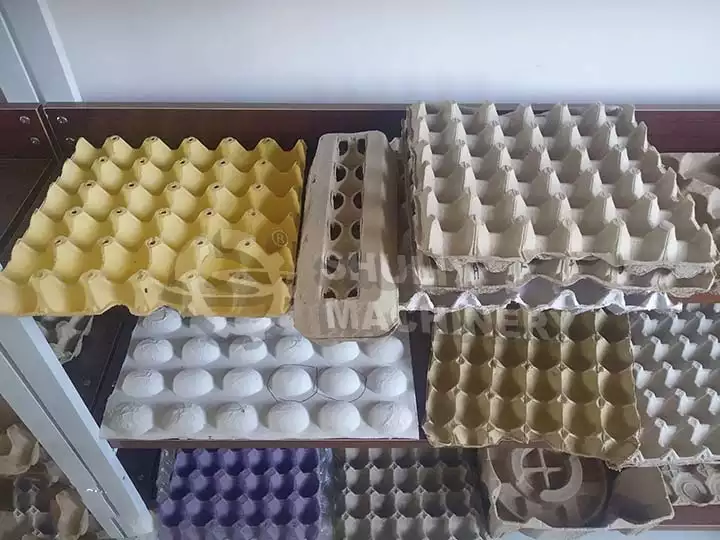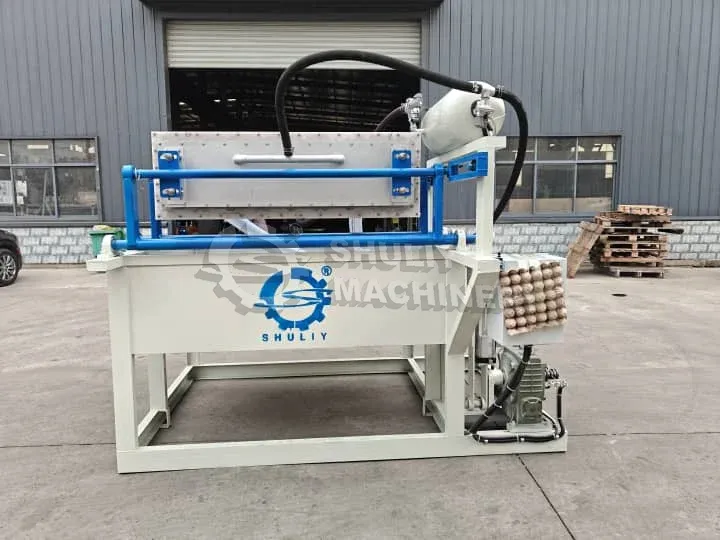
How to Start an Egg Tray Business?
Starting an egg tray business is one of the most accessible manufacturing opportunities today. Plastic bans are reshaping packaging, global egg output has grown roughly 25% over the past decade, and waste paper—your main raw material—costs just $50–$100 per ton in most regions.
Over 15 years, our team at Shuliy Machinery has helped 800+ customers in 80+ countries launch profitable production. This guide distills that field data into a clear, step-by-step plan.
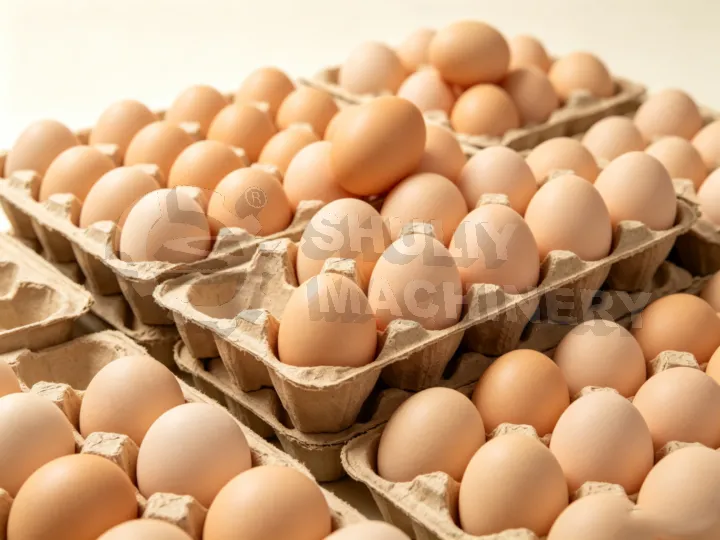
Where the Demand for Paper Egg Tray Lives
Your buyers are:
- Poultry farms (the most stable reorders)
- Egg distributors (bulk volume)
- Supermarkets (premium, hot-pressed trays)
- Export packers (high-quality pulp)
The hottest 2025–2026 markets are Sub-Saharan Africa, the Middle East, South Asia, and Southeast Asia. To size your local opportunity, multiply layer hens in your district by 0.7 trays per hen per month—most emerging markets still have a 15–30% supply gap.
Pre-Investment Checklist
Most new egg tray business ventures fail because operators skip preparation. Before buying equipment:
- Pick your scale: 1,000–1,500 pcs/h (starter), 2,000–3,500 pcs/h (mid-size), or 4,000+ pcs/h (industrial). A common mistake is buying 4,000 pcs/h when local demand only justifies 1,500 pcs/h—overhead will eat into your profit.
- Secure a site: 150–200 m² for a 1,000 pcs/h line, 600+ m² for 4,000 pcs/h. You need three-phase power, water access, and good ventilation.
- Lock in waste paper: build relationships with local printers, schools, and offices for 2–5 tons per day.
- Handle legal basics: register the business, secure a water discharge permit, and check for tax incentives on paper recycling.
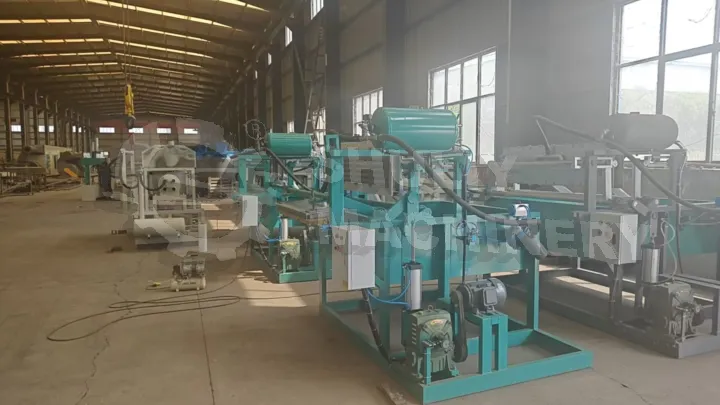
Egg Tray Equipment Selection Guide
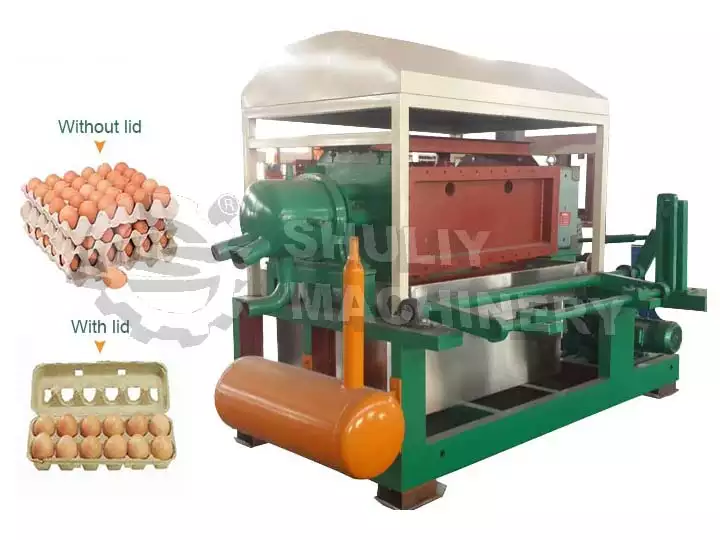
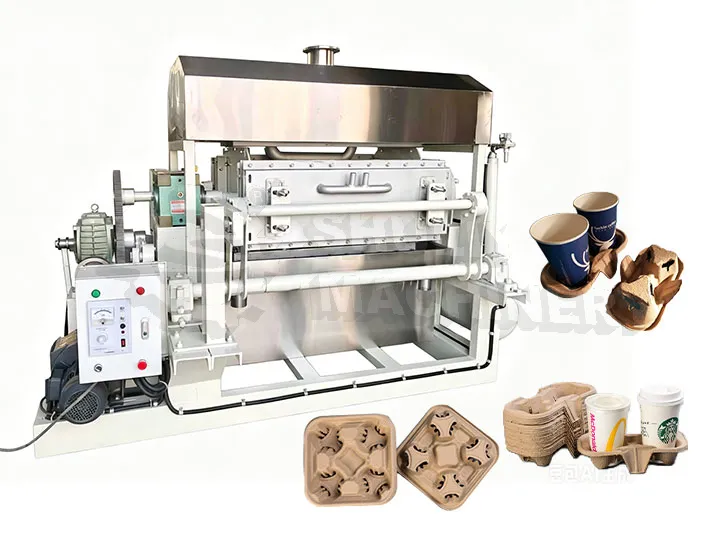
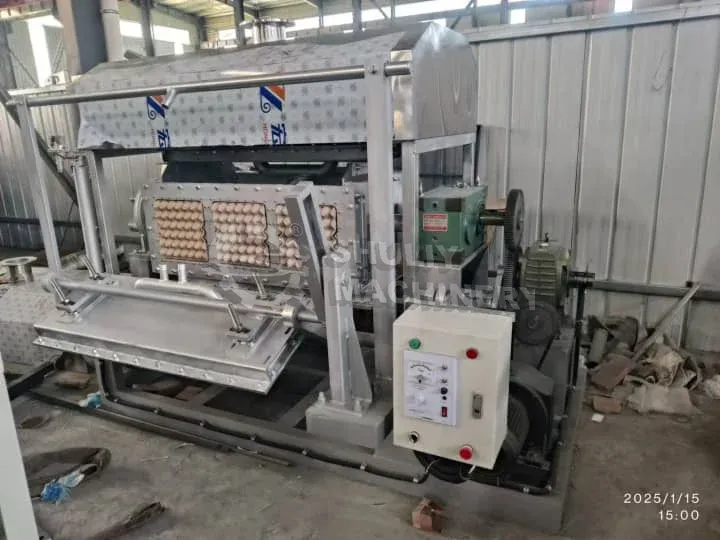
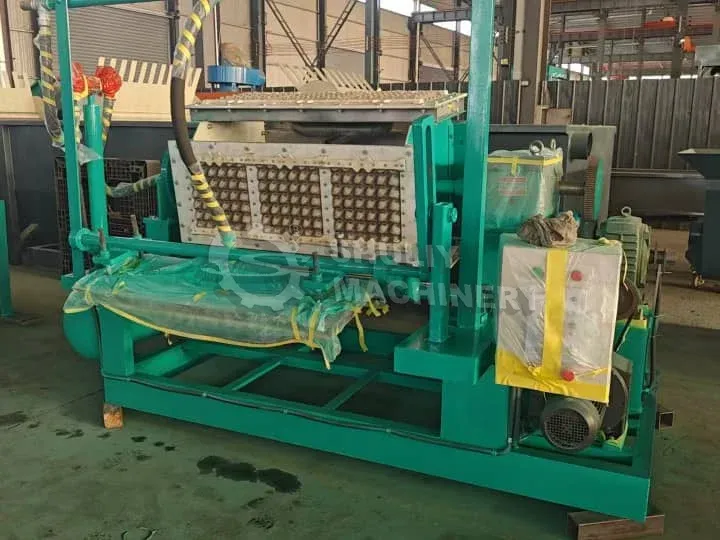
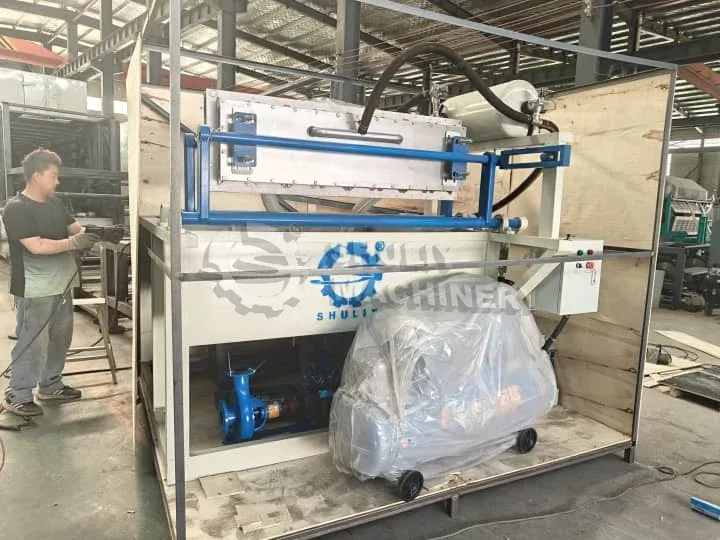
Your egg tray making machine is the heart of the business. Shuliy lines share the same proven pulp-molding technology; what changes is capacity and automation.
| Model | Capacity | Automation | Best For | Indicative Price (USD) |
|---|---|---|---|---|
| SL-3×1 | 1,000–1,500 pcs/h | Manual | Home startup | $5,000–$9,000 |
| SL-4×1 | 1,500–2,000 pcs/h | Manual/semi-auto | Small farm | $8,000–$15,000 |
| SL-3×4 | 2,000–2,500 pcs/h | Automatic | Small factory | $25,000–$45,000 |
| SL-4×4 | 3,000–3,500 pcs/h | Automatic | Export supply | $45,000–$75,000 |
| SL-4×8 | 4,000 pcs/h | Fully automatic | Industrial | $85,000–$120,000 |
| SL-5×12 | 6,000 pcs/h | Fully automatic + metal dryer | Multi-shift plant | $150,000–$220,000 |
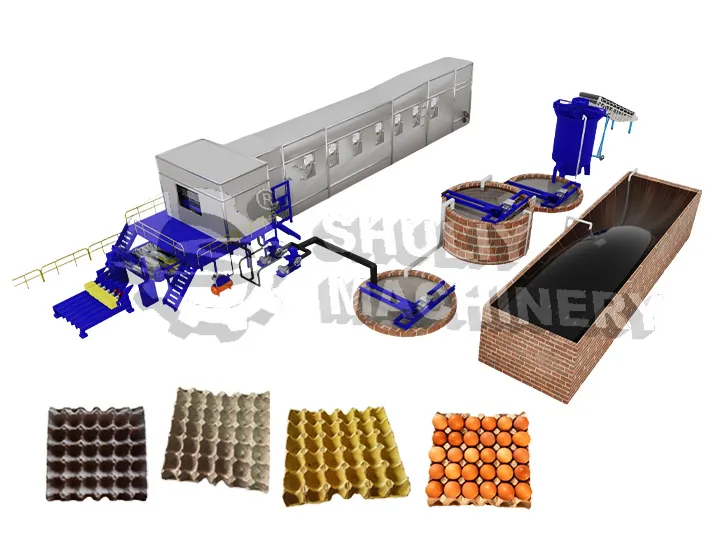
For first-time entrepreneurs, we recommend the SL-3×1 or SL-4×1 with natural drying. Once sales stabilize, upgrade to a 2,000–2,500 pcs/h semi-automatic line and add a brick kiln. You will also need a hydraulic pulper and a drying system; a complete turnkey production line ships them together.
Manufacturing Process and Real Profit Numbers
The cycle has four stages: pulping (15–25 min in the hydraulic pulper), forming (vacuum-pulled onto a metal mold), drying, and packing (125 pcs per bundle). A 1,500 pcs/h line runs with 3–4 workers; a 3,500 pcs/h line needs 6–8.
| Item | Unit | Cost (USD) |
|---|---|---|
| Waste paper | 1 ton (~16,000 trays) | $50–$100 |
| Water + electricity | Per day | $15–$30 |
| Labor (4 workers) | Per day | $30–$60 |
| Total production cost | Per tray | $0.007–$0.013 |
| Wholesale selling price | Per tray | $0.015–$0.030 |
| Gross margin per tray | — | $0.008–$0.017 (≈ 50–60%) |
| Daily gross profit (1 shift) | ≈ 14,000–16,000 trays | $110–$270 |
At these margins, a $35,000 mid-size line pays back in 8–14 months. Adding a hot press lifts the selling price by 15–25%.
Choosing the Right Drying Method
The dryer you pick shapes your energy bill and output more than any other decision.
| Method | Drying Time | Best Capacity | Indicative Cost (USD) | Best For |
|---|---|---|---|---|
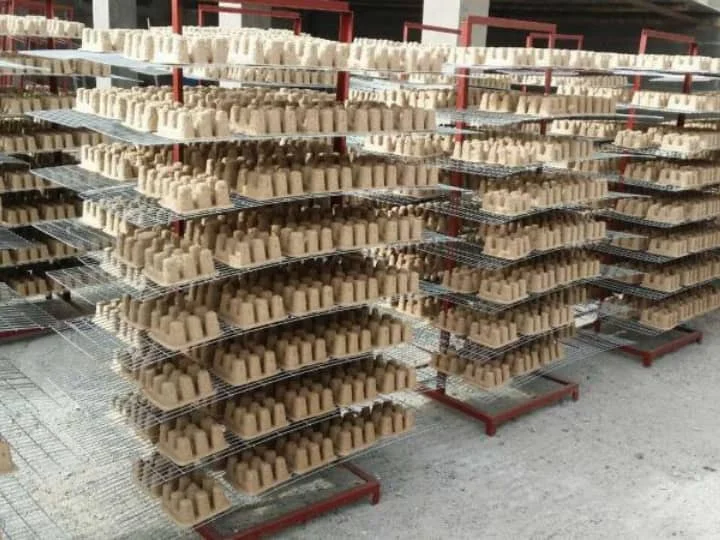
| Natural (sun) | 2–48 h | 1,000–1,500 pcs/h | $200–$500 (racks) | Hot, dry regions; startups |
| Trolley/cart | 30–40 min/batch | 2,000–3,000 pcs/h | $3,000–$8,000 | All climates; small factories |
| Brick kiln | ~15 min (continuous) | 2,500–4,000 pcs/h | $8,000–$18,000 | Medium plants |
| Multi-layer metal | ~25 min (continuous) | 3,500–6,000+ pcs/h | $35,000–$80,000 | Industrial plants |
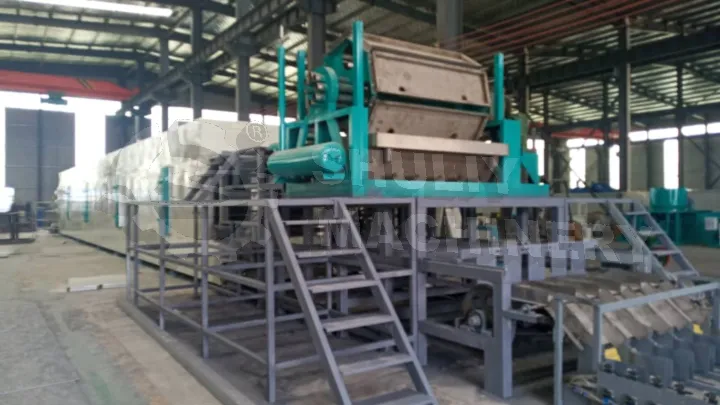
Sales Channels and Real Customer Results
The five channels that work best for new egg tray business owners:
- Direct farm visits (samples and 7-day delivery)
- Wholesale to egg distributors (highest volume)
- Supermarket supply contracts (20–30% premium for hot-pressed trays)
- Government and NGO tenders
- Export via Alibaba or your own website
Our real cases confirm the pattern: start small, master the process, then expand.
- A client in Tanzania with a 4×4 rotary line and brick kiln reached 3,500 pcs/h within three months.
- A Nigerian poultry farmer now supplies neighboring countries with both egg and apple trays.
Conclusion
An egg tray business combines low startup cost, reliable demand, and a strong sustainability story.
The path is the same whether you start with a $5,000 manual line or a $100,000 automatic plant: secure raw materials, choose the right egg tray machine for your market, control drying, and build direct relationships with farms.
Send us your target capacity and city via WhatsApp; we will reply within 12 hours with a tailored proposal.