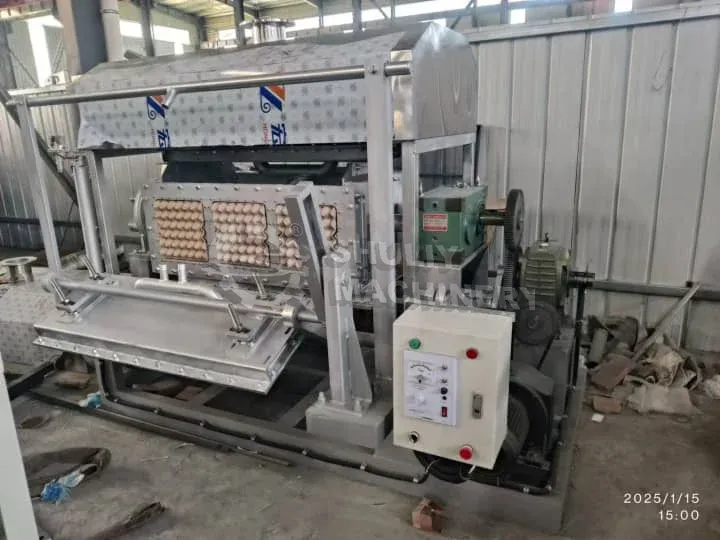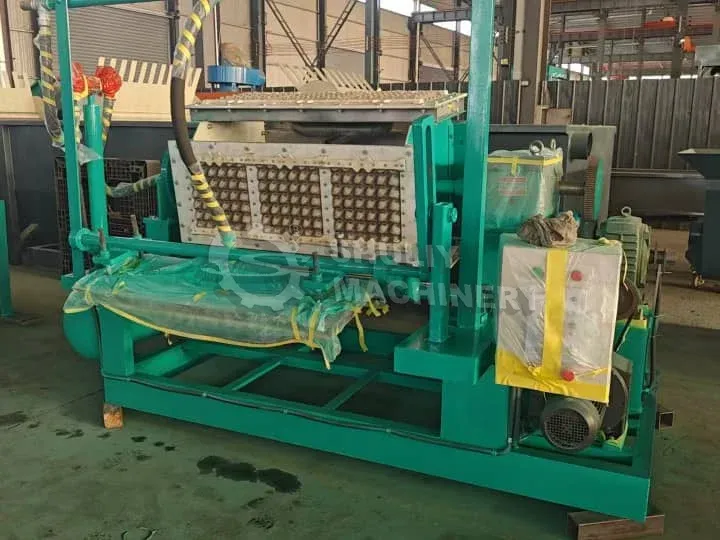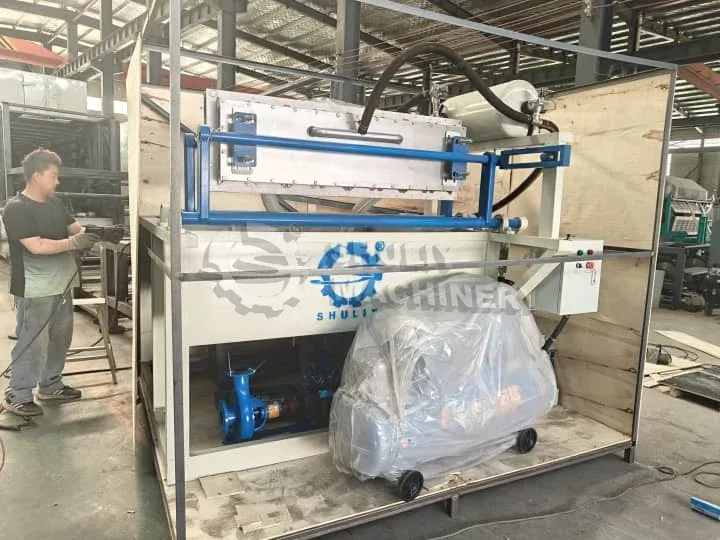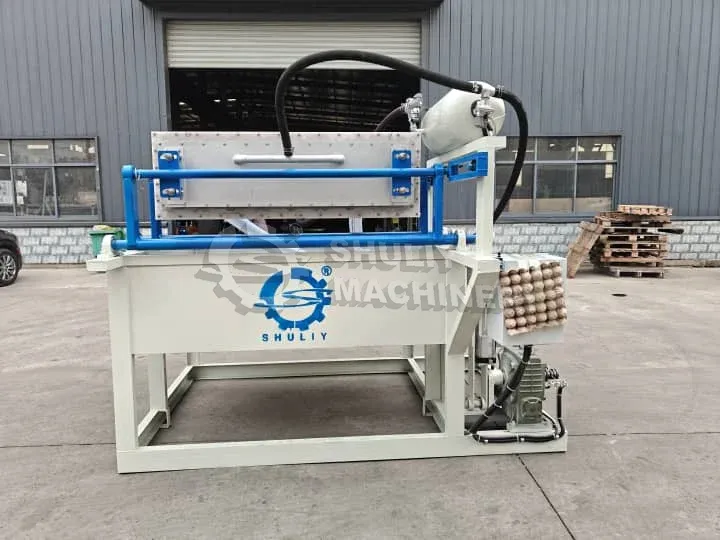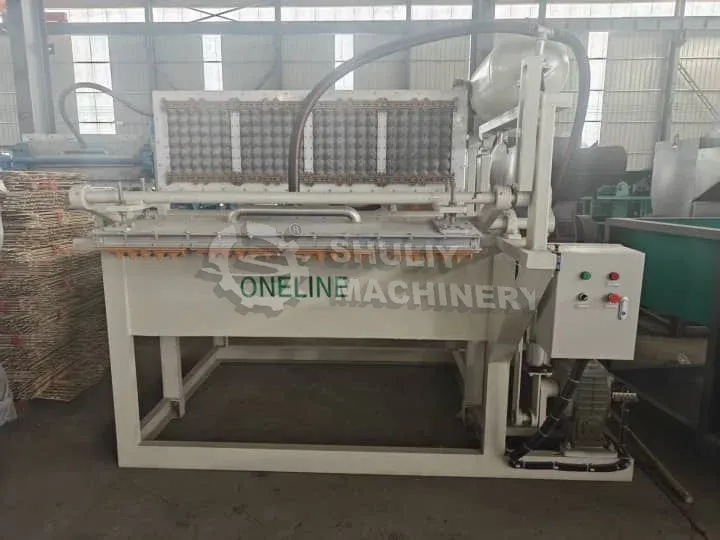
Uganda 4×4 Egg Tray Machine with Metal Dryer: Full Site Installation
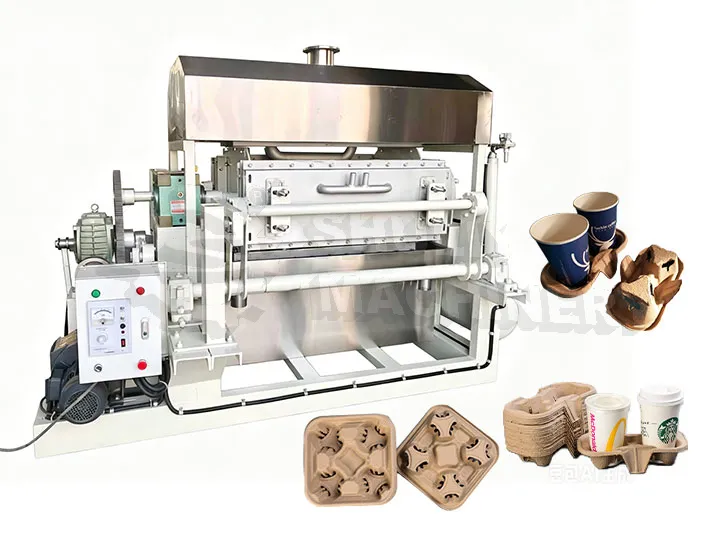
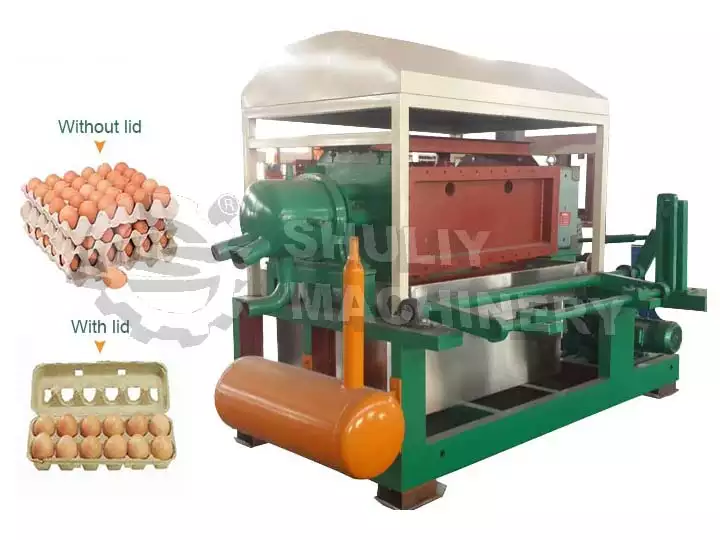
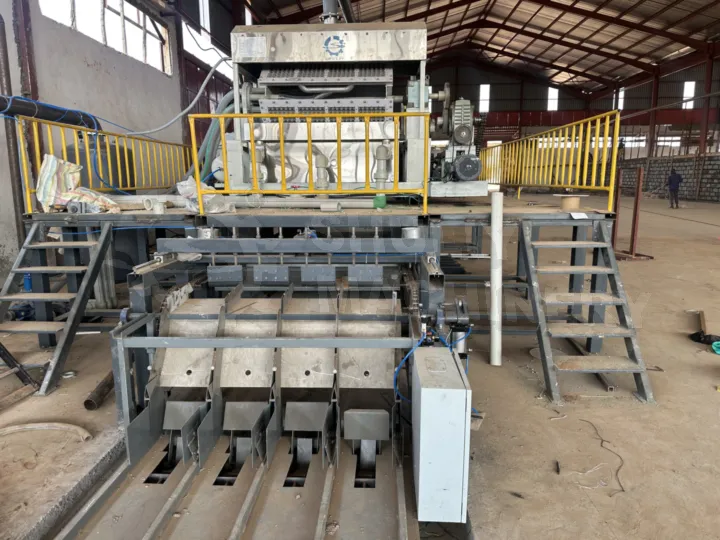
This case study documents a complete 4×4 rotary egg tray machine with multi-layer metal dryer installation in Uganda. Our client, a Kampala-based poultry and packaging entrepreneur, purchased a 2,500–3,000 pcs/h production line in early 2026, and our engineer traveled to the site for full installation, commissioning, and operator training.
Below is the real story: the customer’s background, the equipment decision, the on-site installation process, and the production results several months after launch.
Uganda Customer Background
This customer runs a 60,000-layer poultry farm about 25 km outside Kampala. Like most East African egg producers, he had been buying paper trays from local suppliers at $0.025–$0.030 each, and supply was inconsistent during peak season. By mid-2025, he calculated that bringing tray production in-house would cut his packaging cost by 35–45% and create a profitable side business selling surplus trays to neighboring farms.
His three priorities for the new line were clear:
- Capacity above 2,500 pcs/h (to cover his own farm plus 4–5 neighboring farms)
- Climate-independent drying (Uganda has two rainy seasons when sun drying is unreliable)
- On-site installation support (he did not want to debug a 6-figure machine by video call)
That last point is what pushed him toward Shuliy: we agreed to send an installation engineer to his factory, an offer his shortlist of suppliers could not match.
Why Choose a 4×4 Egg Tray Machine with Metal Dryer for Uganda?
Our customer considered three options before ordering:
- A 3×4 semi-automatic line with brick kiln drying. Lower price, but two-shift capacity capped at 2,000 pcs/h.
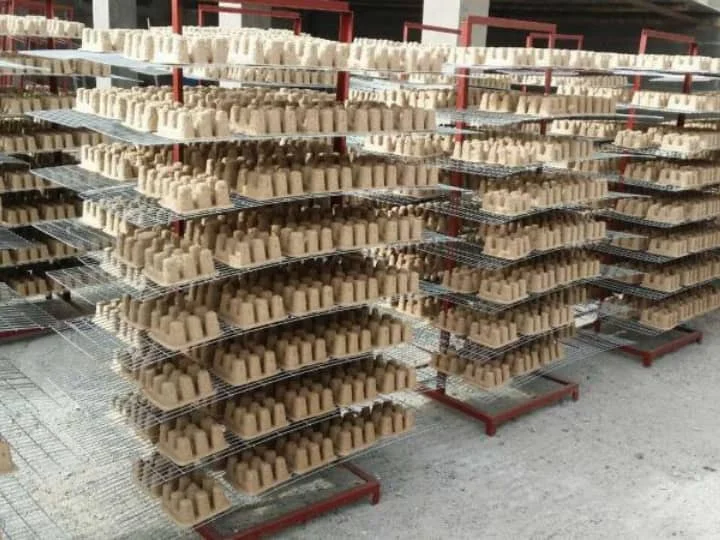
- A 4×4 rotary machine with brick kiln drying. Mid-priced, but Kampala’s humidity extends brick kiln drying time and uses more fuel.
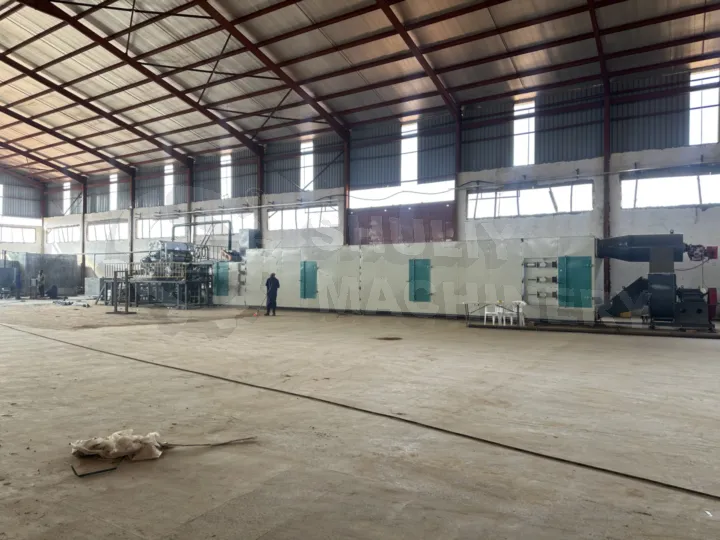
- A 4×4 rotary machine with a multi-layer metal dryer. Higher upfront cost, but consistent output in any weather and a much smaller factory footprint.
He chose option 3. The 4×4 forming machine paired with a 6-layer metal dryer delivers 2,500–3,000 pcs/h reliably, regardless of Kampala’s rain. The energy cost is higher than brick kiln drying, but the saved floor space (the metal dryer is vertical) let him run the line inside a 400 m² shed instead of an 800 m² open yard.
Vår 4×4 rotary egg tray machine and metal dryer also arrived in a single 40 HQ container, which simplified customs clearance through Mombasa.
| Kipengee | Specifikation |
|---|---|
| Forming machine | 4×4 rotary, 2,500–3,000 pcs/h |
| Formar | 30-cavity egg tray + apple tray (interchangeable) |
| Pulper | 1.5 m³ hydraulic pulper, 22 kW |
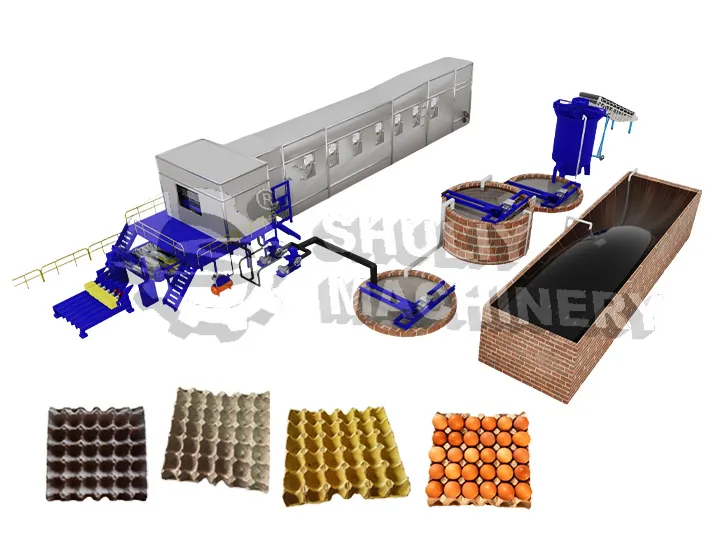
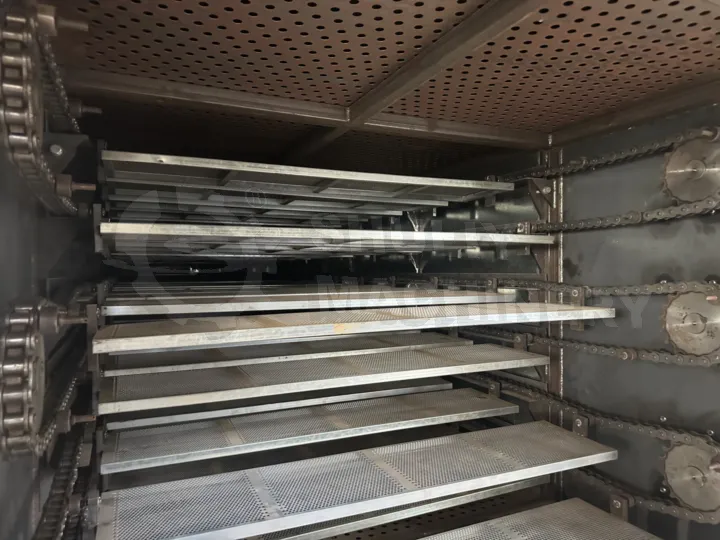
| Torkare | 6-layer metal dryer, 18 m × 2.5 m, gas or electric heating |
| Total power | ~95 kW (three-phase 380 V, 50 Hz) |
| Factory footprint | 400 m² (covered) + 100 m² (raw material storage) |
| Operator team | 6–8 workers (two shifts) |
| Indicative line price (FOB) | $75,000–$110,000 USD |
On-Site Installation: A 12-Day Timeline
The equipment arrived at Mombasa port 38 days after order confirmation and reached the Kampala site by road. Our senior installation engineer, Mr. Liu, flew in with a 6-day business visa and a 25-page installation manual customized for the Uganda line. Below is the actual on-site timeline.
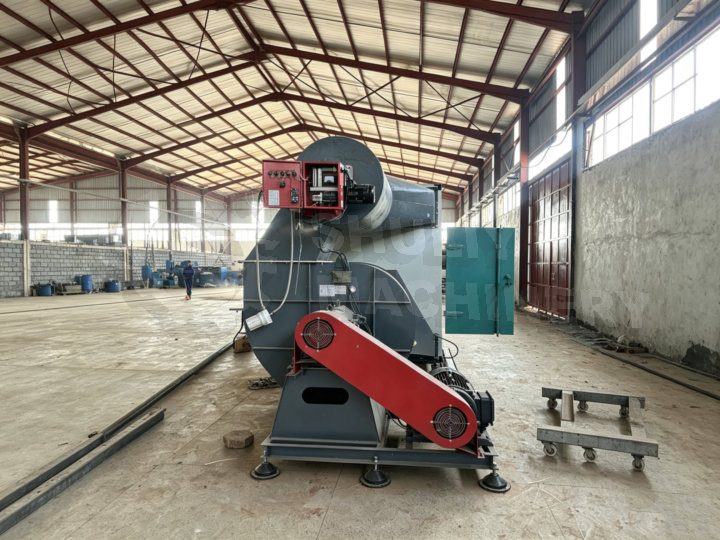
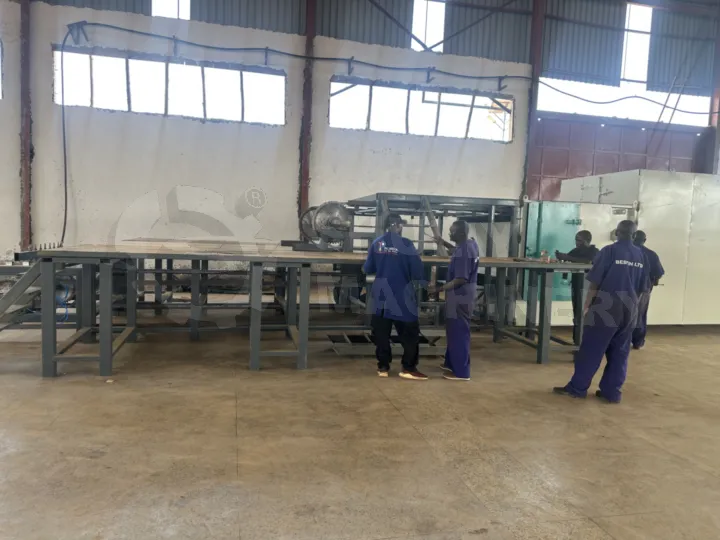
- Day 1–2 — Unpacking and layout. The container was unpacked, components were inventoried against the packing list, and the equipment footprint was marked on the factory floor. Three-phase power, water, and gas lines were checked.
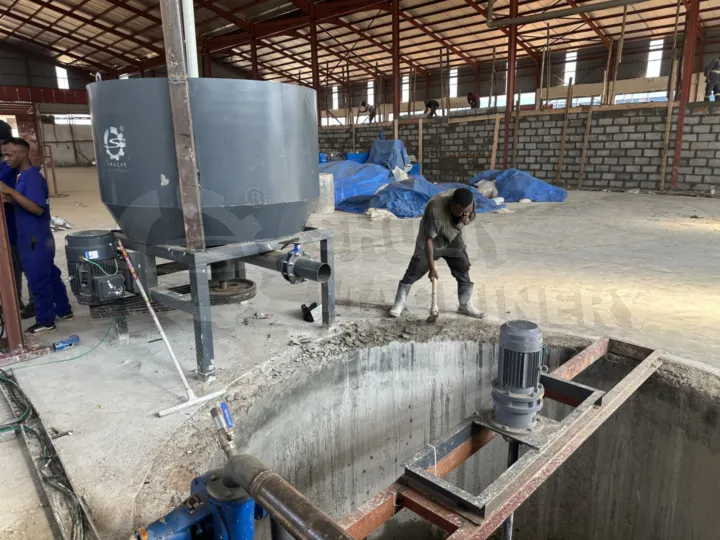
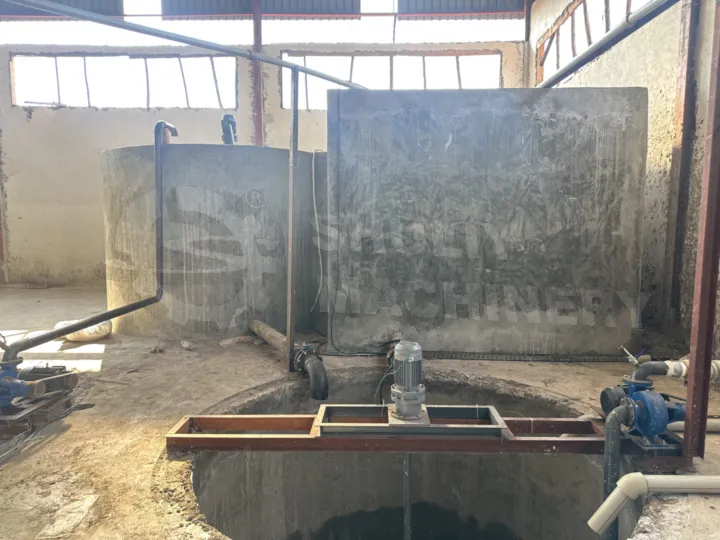
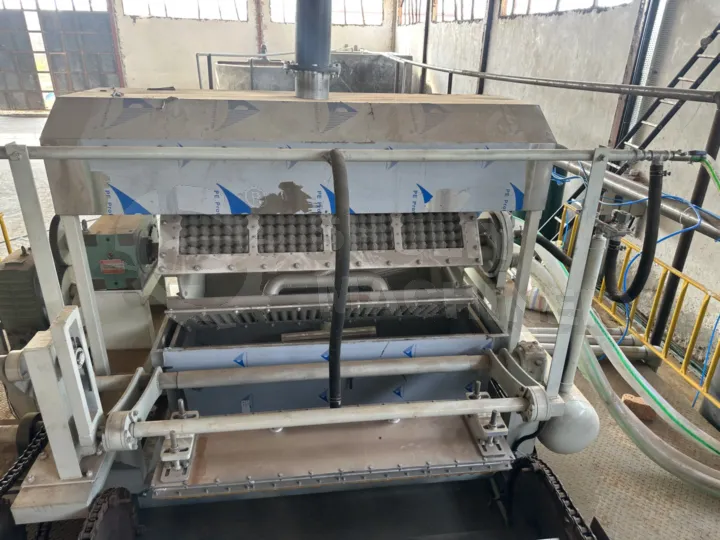
- Day 3–4 — Mechanical assembly. The pulper, forming machine frame, conveyors, and metal dryer body were assembled and leveled. The dryer’s 6 layers were stacked and the chain drive tensioned.
- Day 5–6 — Electrical and plumbing. The control cabinet, motors, and sensors were wired per the diagram. Water supply and drain lines were connected to the pulper and forming section.
- Day 7 — Dry run. The line was powered on without slurry. All motors, conveyors, and dryer fans were tested. Mr. Liu tuned the vacuum pump pressure to 0.6 MPa and the dryer temperature set-points to 180–200 °C.
- Day 8–9 — Wet trial. The first test batch used 200 kg of waste paper. Operators practiced loading the pulper, monitoring consistency, and removing wet trays from the forming machine. Two minor vacuum leaks were identified and sealed.
- Day 10–12 — Performance tuning and handover. The line ran continuously for 6 hours, hitting 2,750 pcs/h on day 11. Final adjustments were made to the dryer belt speed. Operators were trained on routine maintenance, and the handover documents were signed.
By the end of week two, the line was running at 2,500–2,800 pcs/h on a single 8-hour shift, comfortably above the contract specification.
Operator Training and Knowledge Transfer
Training was the most valuable part of the visit, in our customer’s words. Mr. Liu ran a structured 4-day program:
- Day 1 — Pulping and raw material. How to load waste paper, control slurry consistency (4–6%), and avoid common contaminants that jam the pulper.
- Day 2 — Forming machine. Mold changes, vacuum pump checks, and wet-tray handling to minimize breakage.
- Day 3 — Metal dryer. Loading patterns, temperature zone setpoints, gas pressure adjustment, and emergency shutdown.
- Day 4 — Troubleshooting and preventive maintenance. The five most common breakdowns, weekly lubrication points, and how to read the control panel fault codes.
Each topic was supported by a laminated quick-reference card in English, mounted next to the relevant machine. Several months later, he reports that his team can now swap a mold, replace a vacuum pump seal, and clean the dryer fans without external help.
Real Production Results: Several Months In
The line has now been running for over half a year. Our client shared the actual numbers from his monthly production reports (April–September 2025):
| Metric | Target | Actual Average |
|---|---|---|
| Capacity (single shift) | 2,500 pcs/h | 2,700 pcs/h |
| Capacity (two shifts) | 4,500 pcs/h | 4,900 pcs/h |
| Trays produced per month | 1.4 million | 1.55 million |
| Reject rate | < 3% | 1.6% |
| Waste paper cost | $80/ton | $75/ton (local sourcing) |
| Energy + labor per tray | $0.010 | $0.008 |
| Wholesale selling price | $0.022 | $0.024 |
| Monthly gross profit | $10,000+ | $14,800 |
The line is now self-funding its own expansion: Mr. Ssemanda has ordered a second mold set for 30-cavity apple trays, and he is talking to a regional supermarket chain about a tray supply contract.
Customer’s Own Words
“The metal dryer was the right call. During the long rains, my neighbors with brick kilns were losing two days a week. My line kept running, and that is when I picked up three new farm customers. The Shuliy installation engineer stayed until we were comfortable—this was the difference between buying a machine and actually running one.”
— Mr., Poultry & Packaging, Kampala, Uganda
Lessons from This Installation
Three takeaways apply to most first-time African or Southeast Asian buyers:
- On-site installation pays for itself. A 12-day visit eliminated six months of trial-and-error. For a $75,000+ line, the engineer’s travel cost is a small fraction of avoided downtime.
- Match the dryer to your climate first. If you have two rainy seasons or humidity above 70% year-round, a metal dryer outperforms brick kiln drying on uptime, even at higher energy cost.
- Plan for power stability. The Uganda line uses 95 kW. We sized the client’s backup generator to 150 kVA, which is enough to ride through the frequent short outages. Without that, the dryer’s belt drive motor stalls and trips.
If you are weighing a 4×4 line for your market, the Tanzania installation shows what the same 4×4 machine looks like with brick kiln drying. For a full cost breakdown and ROI calculation, see our guide on how to start an egg tray business.
How long does a 4×4 egg tray machine installation take?
A typical 4×4 rotary machine with metal dryer takes 10–14 days on site, including unpacking, mechanical assembly, electrical wiring, dry run, wet trial, and operator training. Add 2–3 days if you also need a brick kiln built, or 1–2 days for an extra mold set.
What power supply does the Uganda line need?
The 4×4 + 6-layer metal dryer line draws about 95 kW. Three-phase 380 V / 50 Hz is standard. We recommend a backup generator of at least 150 kVA to ride through short power cuts. In areas with weaker grids, a voltage stabilizer is also advised.
Why choose a metal dryer over a brick kiln?
A multi-layer metal dryer is fully automatic, climate-independent, and uses a much smaller footprint. It costs more upfront than a brick kiln, but it runs reliably in rain or humidity, needs less labor, and produces more consistent tray quality. In Uganda, this line ran 2,700 pcs/h on average versus 2,000 pcs/h for a similar 4×4 with brick kiln.
How many operators does the line need?
A single 8-hour shift needs 3–4 workers (1 pulper, 1 forming, 1 dryer, 1 packing). Two shifts require 6–8 workers in total. With the metal dryer, no one is needed to manually move trays, which is the main labor saving versus a brick kiln line.
What after-sales support is included?
Every Shuliy line ships with an English manual, wiring diagram, and free remote video support for life. For orders above $30,000 USD, on-site installation by a Shuliy engineer is included (customer covers flights, visa, and accommodation). After handover, you can reach our team by WhatsApp, email, or video call, and we keep spare parts for the full machine lifecycle.
Plan Your Own Egg Tray Installation
If a 4×4 rotary line with metal dryer fits your market, send us your city, target capacity, and monthly waste paper availability. We will reply with a custom configuration, a factory layout drawing, and an itemized quotation.
To read similar cases, see the Tanzania 4×4 + brick kiln project, or start with our egg tray business guide for ROI and cost models.