Egg Tray Machine Maintenance Guide: Daily, Weekly & Monthly Checklist
Egg tray machine maintenance requires short daily, weekly, and monthly routines focused on vacuum pumps, molds, pulping, drying, and air/electrical systems. The guide outlines checks for water flow, lubrication, belt tension, pulp screens, dryer operation, fault logging, and spare parts stocking to reduce unplanned downtime.
Installation examples from Uganda and Malawi show that trained operators can perform many tasks independently when checklists are posted and key wear parts are kept on site. Warning signs include wet trays, vacuum leaks, rising energy use, unusual noises, and frequent mold clogging.
Every egg tray plant we ship operates in a wet, fibrous environment — pulp mist, paper scum, and 8-hour shifts. That environment is what breaks machines, not the machines themselves.
In more than 15 years of exporting egg tray making machines to 80+ countries, the pattern is consistent: plants that follow a short written routine run for years without major stops; plants that don’t replace vacuum pump seals mid-production and lose days waiting for parts.
This guide gives you the full routine — what to do every shift, every week, every month — built around the five systems of a pulp molding line, and includes real examples from our installation teams in Uganda and Malawi. Print the checklists and mount them next to the machine; that is exactly how our Ugandan customer’s crew became self-sufficient within months.
What Skipping Maintenance Actually Costs
Run the numbers on a 2,500 pcs/h line producing a single 10-hour shift: one unplanned stop day costs 25,000 trays. At the typical margin for egg trays ($0.007–$0.013 production cost vs. $0.015–$0.030 selling price, as covered in our egg tray business startup guide), that is roughly $100–$400 of lost margin per stopped day — before repair costs. A daily 15-minute routine costs nothing.
The five most common breakdowns we see on commissioning sites trace back to three neglected items: vacuum loss, contaminated compressed air, and skipped lubrication. Every checklist below is organized to prevent exactly those.
The 5 Systems That Need Attention on Your Egg Tray Machine
| System | Wear / Failure Points | What Neglect Looks Like |
|---|---|---|
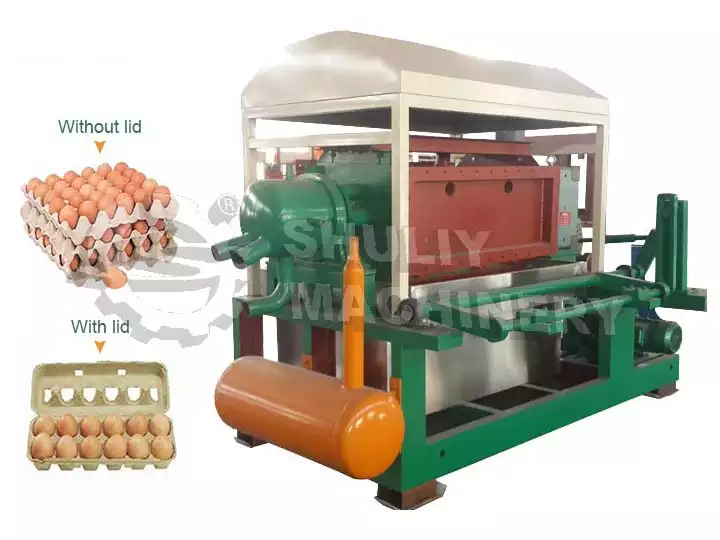
| Forming machine | Molds, transfer surfaces, moving linkages | Weak or misshapen trays, pulp left in mold holes |
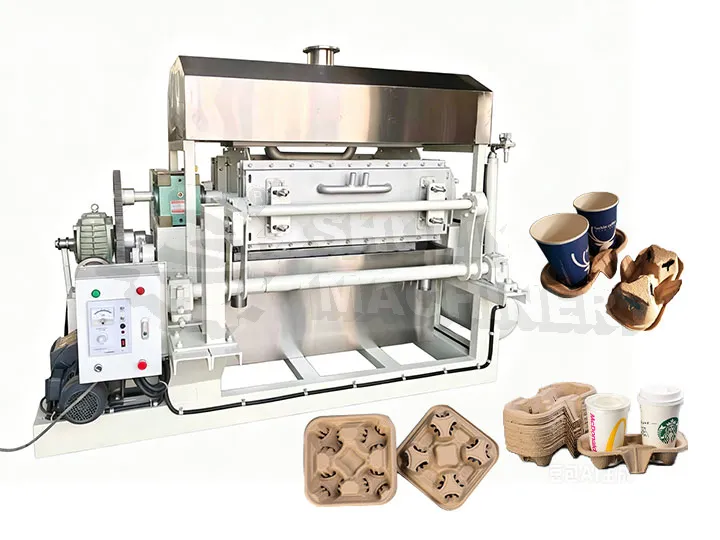
| Vacuum pump (water-ring type) | Water seals, supply flow, pumping chamber | Drop in suction, wet trays, higher power draw |
| نظام اللب | Pulper blades, screen plates, slurry pipes | Inconsistent pulp, slow defluting, blockages |
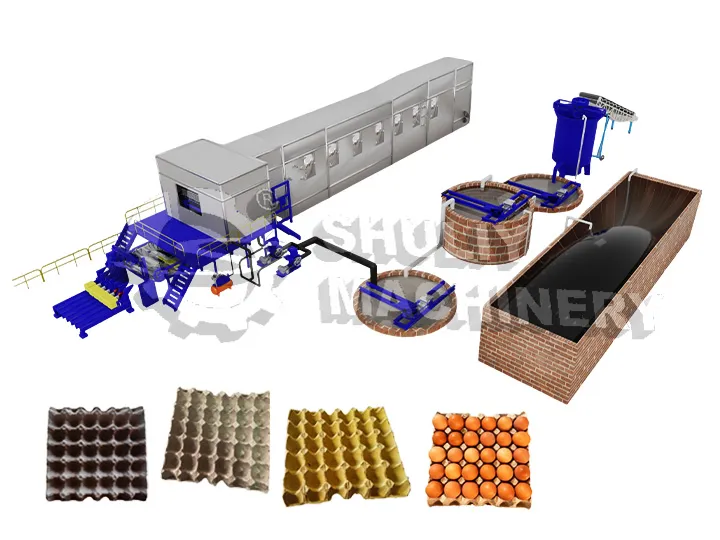
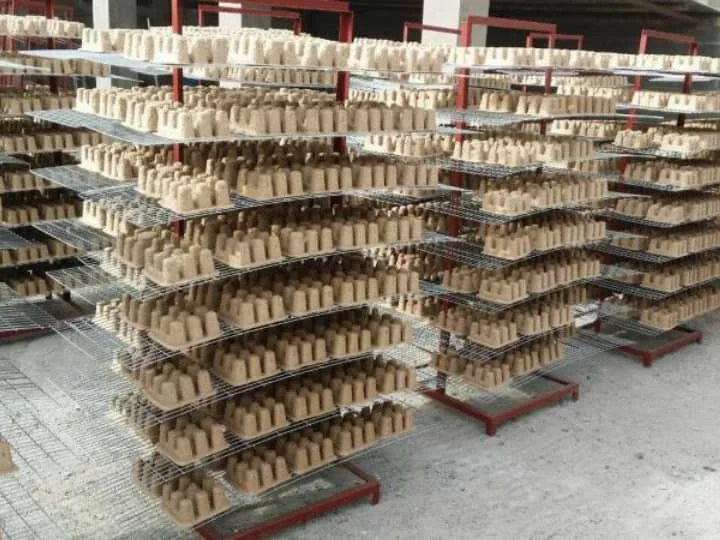
| نظام التجفيف | Fans, rolling axes, belts, burner, insulation | Uneven drying, trays sticking, fuel waste |
| Air & electrical | Compressor tank, pneumatic parts, control panel | Rust in air lines, fault codes, sensor drift |
Your machine ships with a maintenance manual specific to its model — treat this guide as the working companion to it. For how the vacuum system actually forms a tray, see answer #8 in our egg tray machine FAQs: the pump pulls water through the mold in a 5–6 second cycle, which is why pump health decides tray density.
Daily Maintenance Checklist (10–15 Minutes Per Shift)
Before Start-Up
- Check vacuum pump water supply is flowing. Water-ring pumps run on a continuous water seal — no flow means the pump seals grind dry and fail within hours. Confirm the reservoir level (most plants run 2–4 settling tanks) and that water is not thick with recovered fiber.
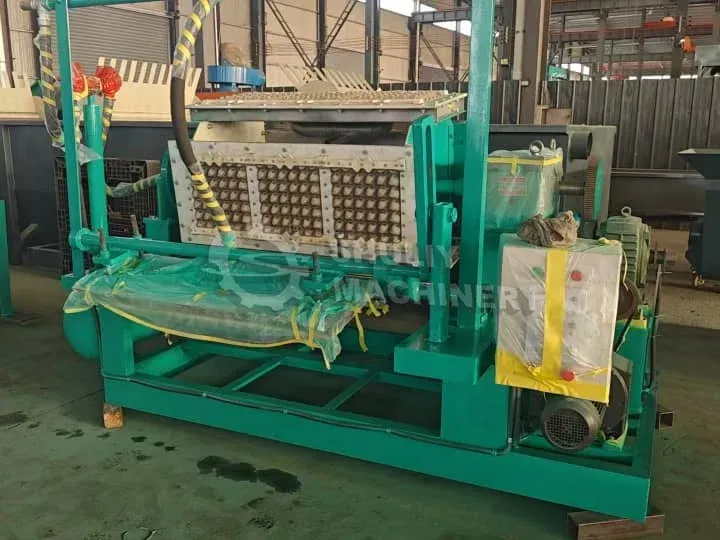
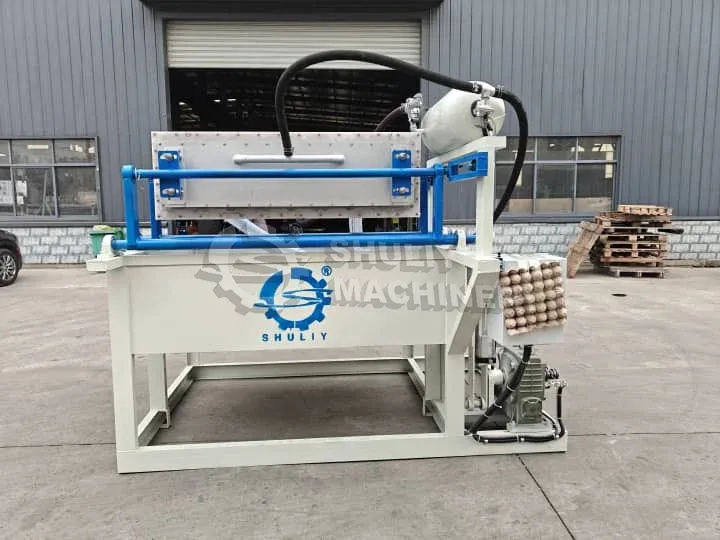
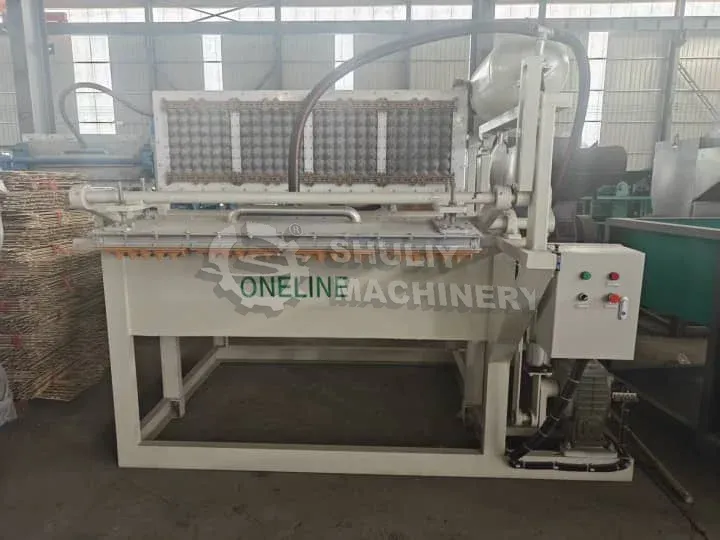
- Inspect the molds visually. Look for pulp clogging the drainage holes and any dents or lifted edges. Molds are the main wearing part on any pulp molding line — a clean mold today is a round, sellable tray next year.
- Drain condensate from the air compressor tank. One turn of the bottom valve releases water that would otherwise rust your pneumatic components and, on carton lines, damage hot press molds.
- Clear the floor and forming area of dropped wet trays and paper scum — the leading cause of slips and of fiber being dragged back into the slurry.
While Running
- Listen to the pump and motor. A change in tone — rattling, cavitation roar — is the earliest warning of seal or bearing trouble, often days before an actual stop.
- Check wet tray condition at the transfer point. Trays leaving the forming machine should hold their shape with 60–70% moisture. Squishy or cracked trays mean suction loss or cycle-time drift — fix it in the shift, not after the dryer.
- Watch the tray weight spot-check. A tray drifting above or below its ~80 g target signals pulp density or vacuum changes; catching it daily is what keeps 1 ton of paper yielding its expected 12,500 trays.
At Shift End
- Rinse molds and the forming area with water. Never let dried pulp sit on tooling overnight — it is the #1 cause of clogged drainage and poor release.
- Skim fiber scum from the water reservoirs and remove debris baskets from the slurry circuit.
- Log three numbers on a clipboard or sheet: output, kWh, and any fault code shown on the control panel. Trends across these three catch almost every developing problem.
Weekly Maintenance Checklist (1–2 Hours)
During our 4-day operator training at a Uganda 4×4 installation, day four was dedicated entirely to this block: the five most common breakdowns, the weekly lubrication points, and how to read the control panel fault codes. Each topic was supported by a laminated quick-reference card mounted next to the relevant machine. Pick one fixed day — Saturday morning suits most plants.
- Lubricate all bearings, guide rails, chains and gears at the points marked in your machine’s manual. In a wet plant, grease washes away faster than it wears — weekly is the baseline.
- Check vacuum pump seals for weeping leaks at the gland and casing joints. Two minor vacuum leaks identified on our Uganda commissioning site were found this exact way during wet trials; sealed early, they never became downtime.
- Inspect drive belts and chain tension on the forming machine and dryer conveyors; replace a frayed belt now rather than mid-production.
- Clean the dryer’s rolling axes and check tray movement through the drying zone — whether brick kiln, trolley or multi-layer metal dryer, stuck rollers bruise trays and scratch belts.
- Verify temperature readouts against set-points (dryers run 180–200°C at the hot end) and note any fuel consumption jump — it usually means insulation has settled or a door seal has gone.
- Blow out the electrical cabinet (power isolated) and check for damp or fiber ingress. Dust plus pulp moisture is a short-circuit recipe.
Monthly Maintenance Checklist (Half a Day)
- Retorque foundation and frame bolts — vibration from forming cycles loosens them gradually; a 30-minute pass prevents structural fatigue.
- Test vacuum performance as a system. Our engineers commission the pump around a 0.6 MPa working figure; if your suction is visibly down against baseline while the pump sounds normal, the seals or water flow are the suspects, not the motor.
- Inspect pulper blades and screen plate for wear and tearing. Worn screens pass long fibers that clog molds — one of the most common root causes we trace back from “bad tray quality” calls.
- Check motor mounting, couplings and wiring for heat discoloration; measure and record amps per motor at rated load so you can compare next month.
- Test all emergency stops and safety guards under load conditions. This is the item everyone skips and no auditor forgives.
- Review your spare parts stock against what you consumed — reorder long-lead items before the shelf is empty, not after.
Wear Parts: What to Keep on the Shelf
We plan this into every shipment. The Malawi 4×1 line, for example, left our factory with two mold sets and spare vacuum pump seals already in the container — four months later the plant was still running without a single parts-ordered stop.
| Part | Why It’s on the List | Replacement Trigger |
|---|---|---|
| قوالب | The primary wearing part on any pulp molding machine | Edge flash, size drift, release problems after deep cleaning |
| Vacuum pump seal kit | Water-ring seals wear continuously; the #1 cause of suction loss | Weeping leak, drop in vacuum, cavitation noise |
| Pulper screen plate & blades | Control fiber length; wear shows up as mold clogging | Torn perforations, rising pulp length variation |
| Drive belts & chains | They snap without warning | Fraying, glazing, stretched pitch |
| Dryer rollers / bearings | Heat plus dust shortens life | Noise, seized rotation, tray drag marks |
| Hoses & pneumatic seals | Wet environment, condensate attack | Air hiss, pressure drop at the hot press (which runs at 0.5–0.6 MPa) |
A practical budgeting rule from our buying guides: hold spare parts inventory worth 5–10% of the machine cost. Custom or hard-to-find parts cause weeks of downtime — see Step 8 of our machine selection guide.
Build Maintenance Skills Into Your Team, Not Just a Schedule
A checklist only works if operators can execute it. At the Uganda site, the crew trained one full day on troubleshooting and preventive maintenance before handover. Several months later, the owner reported his team could swap a mold, replace a vacuum pump seal, and clean the dryer fans without external help — three jobs that otherwise mean a service call and a stopped line.
Three habits made that possible, and they cost nothing to copy
- Laminated, English-language quick-reference cards mounted at each machine, not locked in an office binder.
- Every fault logged in the same notebook, so the same breakdown never surprises the team twice.
- New parts opened and checked against the machine on arrival — not on the day the old one fails.
Shuliy ships every line with a maintenance manual, and our support continues after commissioning — remote technical assistance, video-call guidance and spare parts dispatch are part of the after-sales service we provide for the life of the machine.
Five Warning Signs a Breakdown Is Coming
- Wet trays weaker or wetter than usual → vacuum loss: check pump water flow and seals first.
- Drip or weep at the pump gland → mechanical seal at end of life; replace within the week.
- kWh per tray creeping up → friction somewhere: lubrication, belt tension, or a loaded bearing.
- New noise from dryer or forming machine → bearings and chains, almost always.
- Mold holes clogging more often → pulper screen wear or a change in raw paper; fix upstream, not with a brush every shift.
FAQ on Egg Tray Machine Maintenance
How often should an egg tray making machine be serviced?
Three tiers: a 10-15 minute check every shift (vacuum water flow, mold cleanliness, compressor drain), 1-2 hours weekly (lubrication, belt tension, seal inspection), and a half-day monthly pass (bolts, pulper screen, electrics, emergency stops). Daily care prevents most breakdowns; weekly lubrication prevents the rest.
Can my operators do the maintenance, or do we need an engineer on site?
Operators can handle the entire daily and weekly routine, including mold swaps and vacuum pump seal replacement, once trained. At our Uganda installation the team performed these tasks independently within months of handover. Keep manufacturer engineering on call for pump rebuilds, control system faults, and annual reviews.
What spare parts should I always keep in stock?
Vacuum pump seal kits, drive belts, a spare mold set, pulper screen plates, and dryer rollers or bearings. We recommend budgeting spare parts at 5-10% of machine cost and shipping initial stock with the machine, as we did for the Malawi 4×1 line.
Why does the vacuum pump need water running through it?
Egg tray lines use water-ring vacuum pumps: the water forms the sealing ring that creates suction, and that suction is what pulls pulp onto the mold in a 5-6 second cycle. Loss of water flow overheats the pump and destroys its seals within hours, so flow is the very first item on the daily checklist.
How do I know my molds are worn out?
Three signs: flash or rough edges on finished trays, tray dimensions drifting out of spec, and persistent release problems even after thorough cleaning. Molds are the main wearing part of a pulp molding machine, so keep a spare set and rotate them for deep cleaning instead of running one set to failure.
Start the Routine This Week
Maintenance is not a cost center — it is the cheapest insurance on a line that turns waste paper into sellable product every day it runs. Print the three checklists, assign the shift log, and stock the wear-parts shelf.
Every Shuliy egg tray making machine ships with its maintenance manual, commissioning support, and a parts plan sized to your capacity — and our team is one video call away for the life of your line. Contact us for a free copy of the checklist template matched to your model, and keep your plant in the group that never stops.